Food-grade gold leaf is almost tasteless. It does not add the sharp, coin-like flavor people often expect from metal.
Chocolate, frosting, fruit, or a drink supplies nearly every flavor in the bite.
You may notice a faint papery feel from a folded flake, but thin leaf and fine dust usually disappear on the tongue. Edible gold works as a visual garnish rather than a seasoning.

Edible gold has no strong flavor or aroma. Its form can change mouthfeel, and only a product labeled for food use belongs on a dessert or drink.
What Does Edible Gold Taste Like?
A gold-covered bite can look dramatic and still taste familiar. The change comes from the way each gold form sits on the food and touches the mouth.
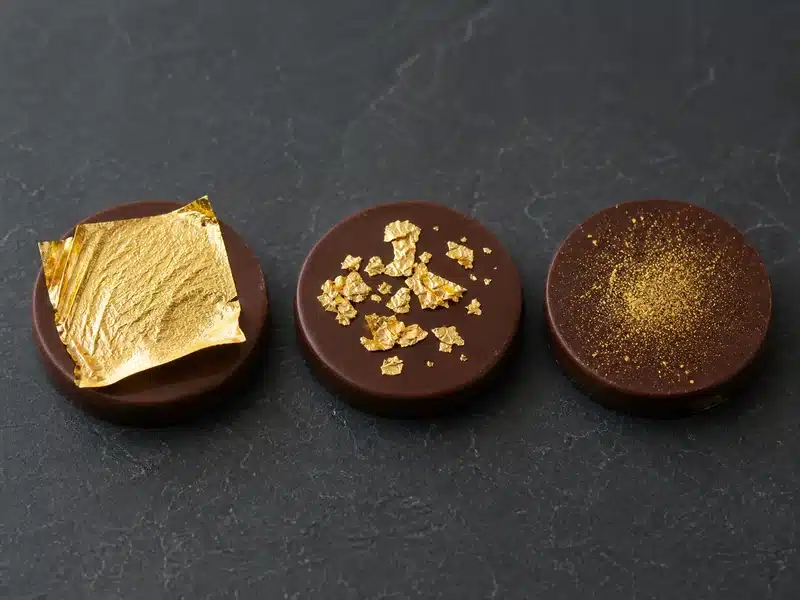
Leaf collapses with the food
Genuine edible leaf is much thinner than household foil. On chocolate, buttercream, or another smooth food, it folds into the bite and becomes hard to notice after one or two chews.
A doubled edge can feel dry for a moment. That brief sensation comes from layers touching each other, not from a strong taste released by the gold.
Flakes can feel papery when they overlap
Loose flakes are thicker where several pieces land together. A small accent on a truffle usually disappears, while a clump may cling to a moist lip or the roof of the mouth.
Large flakes suit foods where a broken, uneven shine is part of the design. They are a poor choice when the surface needs to feel perfectly smooth.
Dust disappears unless it clumps
Fine edible gold dust has almost no separate mouthfeel when it is brushed in a thin layer. On wet icing or in a drink, too much dust can gather into streaks that feel gritty because the particles and carrier ingredients have clumped.
Why Doesn't Pure Gold Taste Like Iron?
The coin-like flavor people call metallic usually needs reactive metal ions to reach the tongue. High-purity gold is chemically stable, so an extremely thin food-grade sheet does not behave like iron, copper, or a bleeding metal utensil.
Gold also brings no useful aroma. It contains no fragrant oil, acid, sugar, salt, or toasted compound that can compete with the food beneath it.
Expectation can still change the experience
A bright gold surface can make a diner predict extra richness, sweetness, or expense before tasting. That expectation may make the bite feel more special even when the decorated and plain pieces came from the same batch.
You can test this by decorating half of a batch and serving both pieces at the same temperature. Compare aroma, sweetness, bitterness, and finish before deciding whether the gold changed anything beyond appearance.
Strong bitterness or grit is a warning
Proper thin food-grade gold should not make a dessert strongly bitter, sharp, or gritty. Those changes point to the food underneath, a binder in a colored powder, a heavy clump, or a product that was never intended for food.
How Can You Tell Whether Gold Is Food-Grade?
A gold color does not prove that a sheet or powder is edible. Craft leaf can contain copper, zinc, or other metals, while nonedible luster products may use binders and pigments made for frames, resin, lettering, or nail art.
Choose a sealed product that clearly states food use and identifies its ingredients. In markets that use the code, elemental gold food color may appear as E175.
- Look for food-use wording. The package should say edible, food-grade, or intended for decorating food.
- Read the ingredient statement. A gold-colored powder may contain mica, starch, sugar, or approved colors rather than pure gold.
- Check the seller and directions. A traceable food supplier should provide storage and application guidance.
- Reject craft products. Karat claims and a convincing color do not turn decorative leaf into a food ingredient.
Food-grade gold also adds no meaningful nutrition at normal decorating amounts. Use it as a color accent and ignore claims that a gold dessert acts as a mineral supplement.
If the label is incomplete or the product has moved out of its original package, do not guess. A small visual effect is not worth using an unidentified metal blend.
Why Does Gold Taste Different on Chocolate, Frosting, and Drinks?
The same gold can appear on dark chocolate, vanilla cream, a cocktail, or a savory bite and seem to belong to four different flavor worlds. Fat, sugar, acid, aroma, and temperature create that difference.
| Food under the gold | Flavor that leads | What the gold changes | Texture risk |
|---|---|---|---|
| Dark chocolate | Roasted cacao, bitterness, and sugar | Bright contrast on a dark surface | Low when leaf lies flat |
| Buttercream | Sweet dairy, vanilla, or fruit | A smooth reflective patch | Wet frosting can wrinkle leaf |
| Dry pastry | Butter, flour, spice, and filling | A crisp surface accent | Loose flakes may feel papery |
| Cold drink | The spirit, fruit, tea, or syrup | Moving sparkle in the glass | Large flakes may float or cling |
| Savory bite | Salt, fat, herbs, and the main food | A ceremonial finish | Heavy garnish can distract |
Fatty foods press thin leaf into the surface, so the gold vanishes cleanly with chocolate or buttercream. A dry cracker or pastry leaves more of a loose edge exposed.
Temperature matters in drinks. Cold liquid can make a folded flake feel firmer, while carbonation moves pieces around without drawing any new flavor from them.
The decorated piece should not need a different recipe. If the base food tastes balanced before decoration, a light gold accent will preserve that balance.
Choose the base by the event as well as the color. A hazelnut cocoa spread or sweet bean filling can hold a small flake on a plated bite.
Ube ice cream gives strong color contrast, but the gold needs to be added just before serving.
How Do You Apply Edible Gold Without Tearing or Clumping?
Gold leaf is so light that breath, a fan, or an oily fingertip can tear or move it. The surface and tools should be ready before the booklet opens.
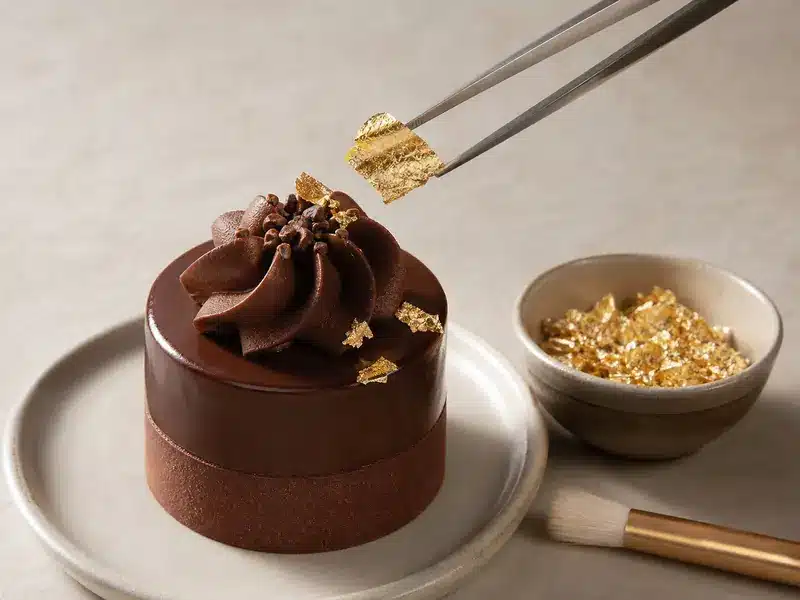
A smooth surface that feels barely tacky holds leaf well. Dripping glaze wrinkles and swallows it, while a bone-dry powdered surface may not grip it at all.
- Dry the tools. Use a soft clean brush, tweezers, or the backing paper supplied with the leaf.
- Set the surface. Let glaze stop flowing, or add the thinnest film of edible adhesive when the product directions allow it.
- Transfer a small area. Guide one edge with a brush or press gently through transfer paper.
- Choose the tool by form. Place flakes with dry tweezers and brush dust in a very thin layer.
- Stop before pieces overlap heavily. Broken accents usually look cleaner and feel better than a folded patch.
Store unused leaf sealed, flat, and dry. Moisture makes sheets stick to each other, and moving air can scatter loose pieces before they ever reach the dessert.
What Causes Edible Gold to Taste Papery, Bitter, or Gritty?
An unexpected sensation can come from technique, the carrier food, or the product. The specific symptom tells you where to look first.
Papery pieces are usually too thick
One fine sheet should collapse. A dry papery patch means flakes overlapped, leaf folded onto itself, or a thick decorative product was used in place of true leaf.
Grit often comes from clumped dust
Fine dust may include a food-safe carrier that gathers on a wet surface. Use less, let glaze settle, and brush from dry to tacky areas rather than dumping powder into one spot.
Bitterness usually belongs to something else
Dark chocolate, caramel that has scorched or aged poorly, citrus peel, alcohol, and some color blends can all taste bitter. Pure gold should not add a lasting bitter finish.
Stop using the decoration if the package is unclear, the color transfers strangely, or a strong metallic note appears. Do not try to solve an unidentified product problem by covering it with more frosting.
Should You Buy Edible Gold for Flavor?
Edible gold makes sense when the visual reveal matters. A wedding dessert, anniversary chocolate, or small plated course can justify a few accents because guests see the effect before the first bite.
It is a poor purchase when the goal is stronger flavor. Better chocolate, fresh fruit, citrus zest, toasted nuts, a crisp peppermint candy, or a carefully made sauce changes the food more than a gold sheet.
Use the smallest amount that creates the look. Gold stands out on dark chocolate, deep berry glaze, and glossy caramel.
Full coverage costs more, adds no flavor, and increases the chance of a papery layer.
The value is personal because the ingredient supplies theater. If nobody will see the dish before eating it, a flavor ingredient usually gives a clearer return.
Sources
Frequently Asked Questions
Does edible gold taste like a coin?
No. Food-grade gold lacks the sharp mineral taste people connect with iron or copper, and the decorating amount has almost no aroma.
Can you feel gold flakes in a drink?
A large folded flake may feel firm for a moment in a cold drink. Fine flakes and dust usually pass without a clear texture.
Does a 24-karat label prove gold leaf is edible?
No. Karat information describes purity, while food-use labeling states whether the product was made and handled for eating.
Can edible gold color a whole bowl of frosting?
Leaf covers the surface instead of dissolving like food dye. Gold dust can tint a brushed area, but a large batch needs a product designed as an edible color.
Does edible gold expire?
Pure dry gold does not go stale like food, but damaged packaging, moisture, mixed ingredients, or contamination can make a decorating product unsuitable. Follow its date and storage directions.

Carrie is a food writer and editor with more than 15 years of experience. She has worked for some of the biggest names in the food industry, including Bon Appétit, Food & Wine, and Martha Stewart Living.
As the Editor in Chief of EpicureDelight, Carrie oversees all of the content on the site. She also manages the team of contributing writers and editors, who help to create delicious recipes, helpful tips, and informative articles that you’ll find on the site.
A native of the Chicago area, Carrie is passionate about all things food. She loves trying new restaurants and experimenting with new recipes in her kitchen. She’s also a graduate of the Culinary Institute of America, so she knows a thing or two about food!