
That sharp, savory smell from a spice rub or a pot of soup often comes from one small jar: onion powder. It is concentrated, dry, and disperses so cleanly that most recipes depend on it without a second thought.
When the jar is empty, though, a good onion powder substitute keeps dinner on track. The swaps below are ranked by how close they come to onion powder's flavor, and each one includes a simple ratio so you can correct texture or moisture on the fly.
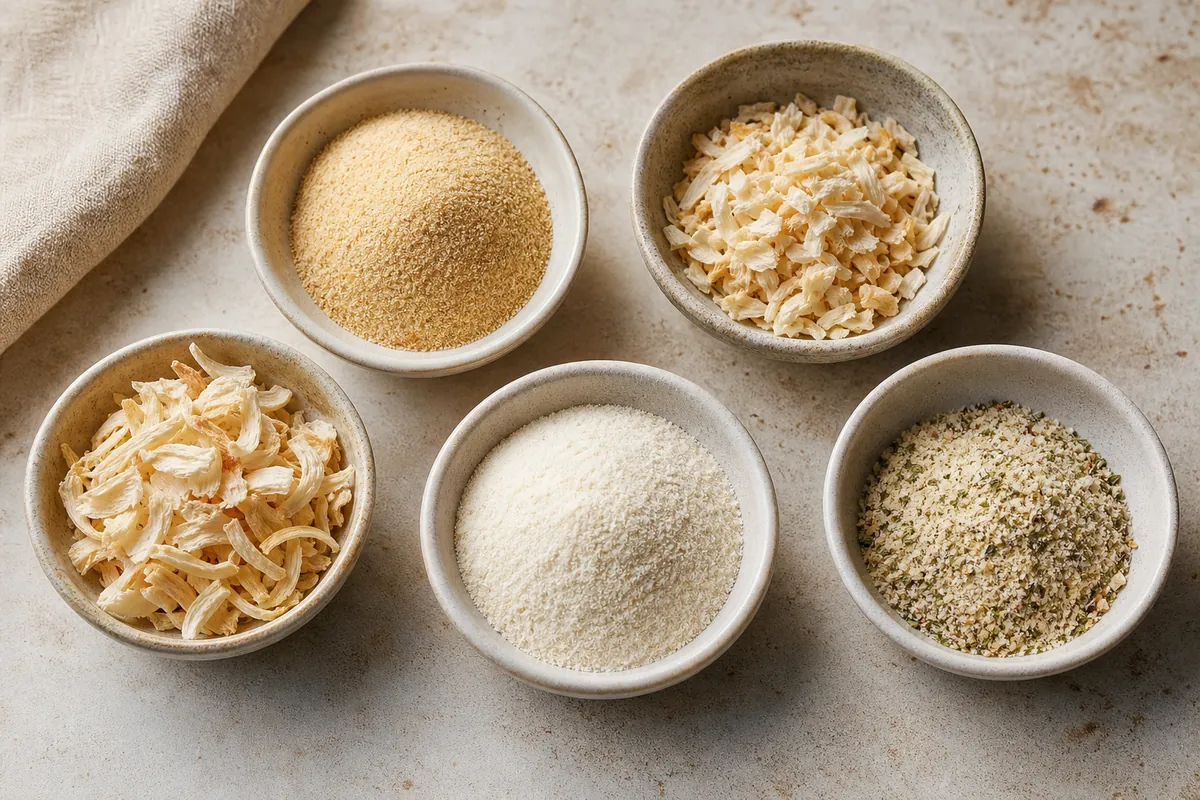
The fastest onion powder replacement is granulated onion at a 1:1 ratio, ideally pulsed finer. Onion flakes and shallot powder also swap in at 1:1. For a non-onion rescue, garlic powder at ¾ teaspoon per 1 teaspoon works with a pinch of extra salt. Fresh grated onion covers the flavor but needs squeezing first.
5 Onion Powder Substitutes Ranked by Flavor Closeness
The table below gives you a quick reference before you commit to any swap. Use it to match your substitute to the recipe type, then read the section for that substitute to fine-tune.
| # | Substitute | Best For | Ratio | Key Note |
|---|---|---|---|---|
| 1 | Granulated Onion | Both | 1:1 | Pulse to powder-fine |
| 2 | Onion Flakes (crushed) | Dry Rub | 1:1 | Crush smaller for blends |
| 3 | Shallot Powder | Both | 1:1 | Slightly sweeter profile |
| 4 | Garlic Powder + Salt | Sauce | ¾:1 | Add salt gradually |
| 5 | Fresh Grated Onion | Sauce | 1:1 | Squeeze dry before using |
If you often swap between dry onion products, replacing soup mix seasonings follows similar dosing logic and is worth reading alongside this guide.
1. Granulated Onion
Granulated onion is the single closest swap for onion powder. It comes from the same dried base, just cut more coarsely, so the onion flavor is nearly identical.
The main issue is texture. Granulated onion leaves small sandy bits in cold blends or smooth sauces.
Pulsing it in a spice grinder for 10 to 15 seconds brings it close to powder-fine.
Onion Powder vs. Granulated Onion
Works for: dry rubs, soups, marinades, baked coatings, spice blends
Skip if: your recipe needs an ultra-smooth cold blend and you have no grinder
- Ratio: Use 1:1 without any other adjustment.
- Grind first: Pulse in a grinder or crush in a zip-lock bag until fine before adding to cold dips or salad dressings.
- Hot dishes: In soups and braises, skip grinding - the granules dissolve fully during cooking.
- Dry rubs: Grinding is worth the extra minute; coarse bits can create uneven crust on meat.
We reach for this swap first, every time. If you want to understand what makes onion powder's flavor profile distinct, that breakdown helps you judge whether your granules need processing.
2. Onion Flakes (crushed)
Onion flakes sit in most spice racks and carry a real, concentrated onion flavor. They are coarser than granulated onion, but a quick crush closes most of that gap.
Press them between two spoons or pulse briefly in a grinder. In hot recipes they rehydrate well.
In no-cook blends, though, even crushed flakes can feel gritty against a smooth base.
- Ratio: 1:1 by volume after crushing.
- Dry rubs and roasting: Crushed flakes coat meat evenly and char slightly, which adds a mild sweetness.
- Soups and stews: No crush needed - they soften and blend into the liquid.
- Skip for: No-cook dips, smooth salad dressings, or any blend where texture must be invisible.
- Storage tip: Flakes absorb moisture faster than powder, so seal the container tightly after each use.
For a broader look at flake-based seasoning swaps, there are several options worth keeping on the list.
3. Shallot Powder
Shallot powder is a mild, slightly sweeter alternative that works wherever onion powder rounds out a dish rather than dominates it. It is not the same sharp punch, but it is close enough in most recipes that few people notice.
- Ratio: 1:1, but add a small pinch of salt to sharpen the overall impact.
- Best uses: Vinaigrettes, compound butters, cream-based sauces, and egg dishes.
- Balancing sweetness: If the blend tastes too mild, a few drops of soy sauce or half a teaspoon of nutritional yeast restores savory depth.
- Skip for: Bold onion-forward rubs or seasoning blends where the sharper onion punch is the whole point.
When picking the right onion variety matters as much as the powder form, choosing a sweeter onion type follows the same flavor logic as reaching for shallot powder here.
4. Garlic Powder + Extra Salt
This one is honest: it will not taste like onion powder. What it does is recover the savory, rounded depth that onion powder contributes, which is often what a recipe actually needs most.
Use ¾ teaspoon of garlic powder for every 1 teaspoon of onion powder called for. Garlic is more intense by volume, so that small reduction prevents it from overpowering everything else.
- Add salt gradually: Start with ¼ teaspoon of extra salt per teaspoon replaced, then taste before adding more.
- Optional pinch of sugar: Onion powder has mild natural sweetness; a small pinch of sugar mimics that and balances garlic's sharper edge.
- Best uses: Meat marinades, roasted vegetables, and any recipe where the onion powder is one of several spices.
- Skip for: Onion-forward seasoning blends, onion-flavored toppings, or anywhere the onion note is the primary flavor.
If the dish also calls for whole or sliced onion, mild onion variety swaps pair well alongside garlic powder to rebuild the missing character.
5. Fresh Grated Onion
Fresh onion is the most aromatic swap on this list. It is also the wettest, which is where the trouble starts.
Grating releases a lot of liquid, and that moisture thins sauces and clumps dry rubs fast.
The fix is simple: grate, then squeeze through a clean paper towel until no more liquid drips out. What remains is concentrated onion pulp with strong, bright flavor.
- Ratio: 1 teaspoon onion powder = 1 tablespoon fresh grated onion (squeezed dry).
- Sauces and braises: Squeezed pulp dissolves into hot liquids cleanly; stir in early so it cooks through.
- Dry rubs: Use only if you plan to cook immediately - fresh onion in a rub will go sticky and wet within minutes.
- Skip for: No-cook blends, spice mixes made ahead of time, or any recipe where extra moisture would change the structure.
- Flavor note: Fresh onion is sharper and brighter than the mellowed flavor of powder; expect a slightly more assertive result.
For context on picking the best fresh onion variety, yellow onions tend to give the most neutral, powder-like flavor once cooked.
Making Onion Powder Substitutes Work
The biggest adjustment mistake is swapping by flavor alone without accounting for texture and moisture. Dry swaps like granulated onion and flakes behave almost identically to powder in hot dishes, but they need grinding for cold, no-cook applications.
Wet swaps like fresh onion change the structure of both rubs and sauces. Start with the ratio in the table, then taste after the first minute of cooking - or after mixing, for no-cook blends - before adding any salt correction.
If your swap includes a pre-made mix (like onion dip mix or a seasoning packet), reduce other sodium sources before you start.
- For dry swaps, grind or crush to the finest texture your recipe allows.
- For fresh onion, squeeze out all visible moisture before measuring the pulp.
- For blends with added salt or sugar, taste first and hold back other seasoning until you know the baseline.
Frequently Asked Questions
Granulated onion is the closest match at a 1:1 ratio. Pulse it finer in a grinder for cold blends; in hot dishes it dissolves without any processing.
Yes, at a 1:1 ratio after crushing them smaller. Avoid flakes in smooth, no-cook dips where their coarser texture stays noticeable.
Use 1 tablespoon of grated fresh onion per 1 teaspoon of powder, squeezed dry first. Fresh onion adds moisture, so it works best in cooked sauces and braises.
It is, but shallot powder is milder and slightly sweeter. Add a small pinch of salt to sharpen the flavor if the recipe relies on onion powder's stronger punch.
Use half the amount called for and reduce other salt in the recipe. Dip mix often contains added salt, sugar, and flavoring that can quickly overshadow your seasoning balance.
5 Best Onion Powder Substitutes (Quick Swaps)
Ingredients
Equipment
Method
- Match your use: for soups/sauces choose a swap that disperses (processed granules or flakes); for dry rubs you can keep a slightly coarser texture.
- Start with the ratio in the table above: begin with 1:1 for closest dry swaps, then adjust if your swap is wetter (fresh onion) or includes extra salt (dip mix).
- If using granulated onion or flakes, pulse/crush until finer so the blend behaves more like powder.
- For fresh onion, grate then squeeze through a paper towel so you don’t thin sauces or make rubs clumpy.
- Taste after the first cooking minute (or after mixing for no-cook blends) and correct: add salt for savory lift or a pinch of sugar to mimic onion-powder sweetness.
Notes
- Texture matters: finer swaps blend more evenly, especially in sauces and spice pastes.
- Moisture matters: fresh onion needs squeezing or it can change the thickness of the dish.
- Salt matters: savory mixes (like dip mixes) may already include salt—reduce added salt.
Tried this recipe?
Let us know how it was!
Carrie is a food writer and editor with more than 15 years of experience. She has worked for some of the biggest names in the food industry, including Bon Appétit, Food & Wine, and Martha Stewart Living.
As the Editor in Chief of EpicureDelight, Carrie oversees all of the content on the site. She also manages the team of contributing writers and editors, who help to create delicious recipes, helpful tips, and informative articles that you’ll find on the site.
A native of the Chicago area, Carrie is passionate about all things food. She loves trying new restaurants and experimenting with new recipes in her kitchen. She’s also a graduate of the Culinary Institute of America, so she knows a thing or two about food!



