Raw bacon lasts about 7 days in a refrigerator at 40°F or below, while bacon cooked at home lasts about 4 to 5 days.
Freeze raw bacon if you will not use it within the refrigerator window. USDA guidance gives ordinary bacon about 4 months in the freezer for best quality, though the package use-by date should be followed when it arrives first.
Discard bacon that stayed above 40°F for more than 2 hours, or more than 1 hour above 90°F. Smell cannot cancel an unsafe time and temperature history.
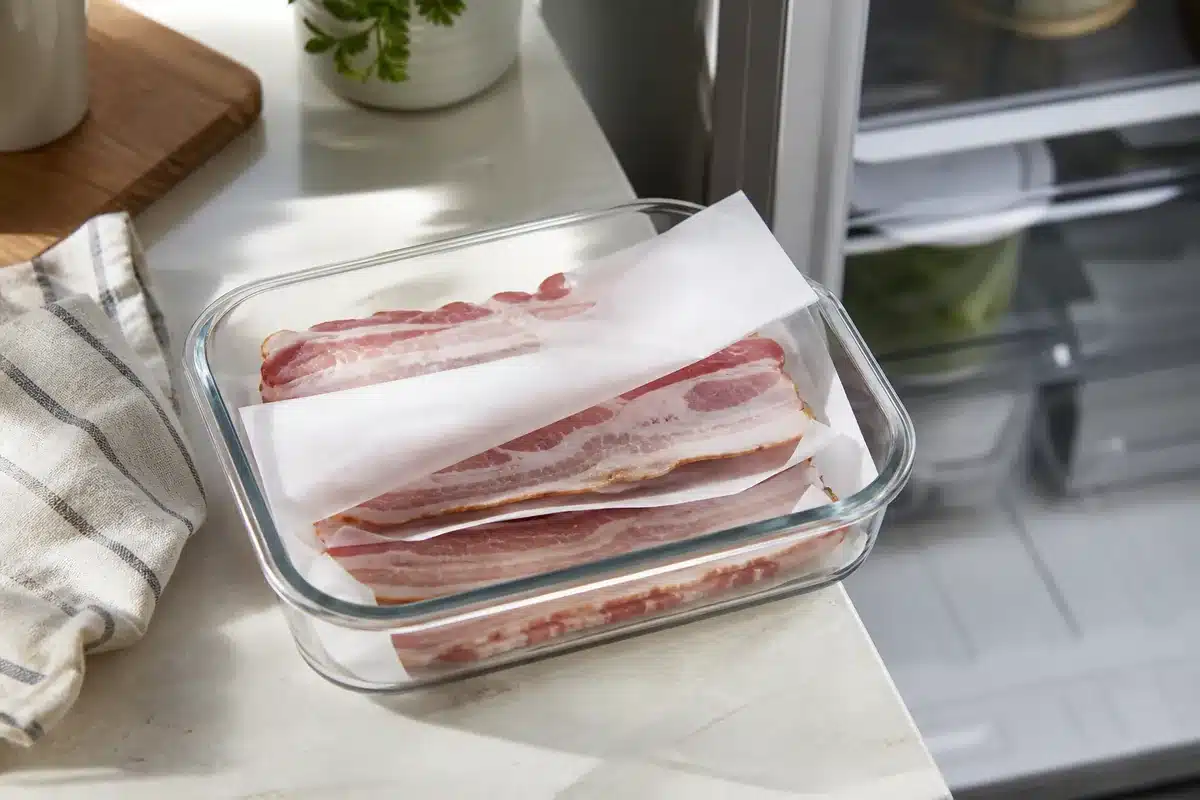
Bacon shelf life depends on whether it is raw, cooked, opened, or thawed. Keep it cold, follow the package date for raw bacon, use cooked bacon quickly, and discard any bacon with sour smell, slime, or dull green-gray color.
How Long Does Raw Bacon Last in the Refrigerator?
| Bacon state | Refrigerator at 40°F | Freezer at 0°F | Key instruction |
|---|---|---|---|
| Ordinary raw bacon | 7 days | About 4 months for best quality | Follow an earlier use-by date |
| Cooked at home | 4 to 5 days | About 1 month for best quality | Cool and cover promptly |
| Purchased shelf-stable cooked | 5 to 14 days after opening | About 3 months | Use the package's exact direction |
| Dry-cured sliced | Up to 4 weeks | About 3 months | Confirm the product is truly dry-cured |
Put raw bacon in the refrigerator as soon as you return from shopping.
The seven-day window covers ordinary refrigerated pork, beef, poultry, and pancetta-style bacon under USDA guidance. Dry-cured slab bacon and shelf-stable cooked products are separate categories.
A sell-by date helps a store rotate stock. A use-by date reflects the maker's quality plan, so use or freeze the package by that date when it comes before day seven.
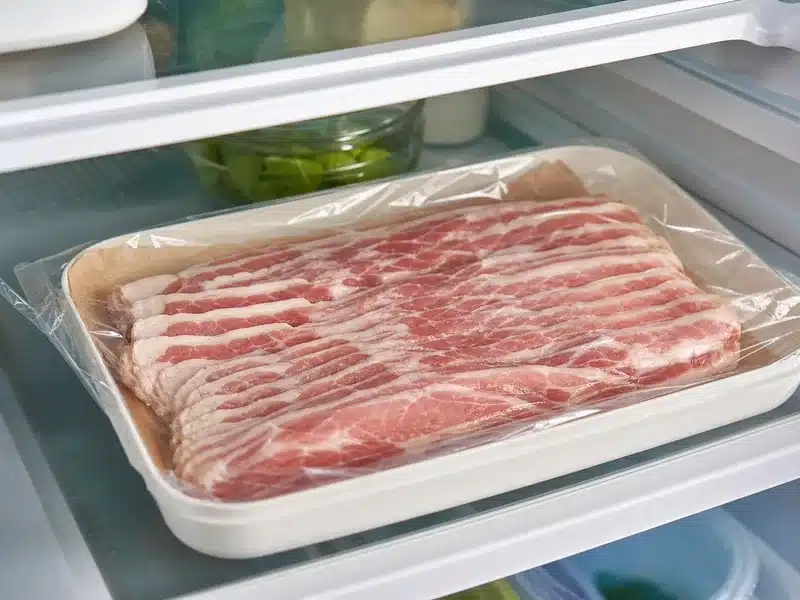
Keep bacon in its original sealed package until needed. After opening, wrap it tightly or move it to a leakproof container on a low refrigerator shelf so raw juices cannot reach ready-to-eat food.
Do not store an opened stack in loose butcher paper alone because exposed edges dry while the package can leak. Place the wrapped stack inside a sealed bag or container, then wash the board, knife, and hands that touched raw bacon before handling breakfast bread or fruit.
Flavor does not change the storage rule. A reader comparing smoky and salty notes in the smoky flavor check still needs to keep the raw meat cold.
How Long Does Cooked Bacon Last?
The clock changes as bacon leaves the skillet.
Home cooking does not make bacon shelf-stable, so cool the strips promptly, cover them, and refrigerate them for 4 to 5 days.
Home-cooked bacon gets a leftover clock
Blot excess grease if you like, then refrigerate the bacon in a shallow covered container. Count 4 to 5 days from the day it was cooked.
Purchased cooked bacon follows its own package
Some packs are refrigerated and others are shelf-stable before opening. Follow the storage statement and opened-use window printed on that package.
The thawing method controls the next move
Bacon thawed in the refrigerator can remain cold within its normal raw window. Bacon thawed in cold water or a microwave must be cooked at once.
Store crisp and soft bacon the same way. Texture changes how you reheat it, but it does not extend the safe refrigerator time.
Cool portions in a shallow container when they are meant for a make-ahead breakfast. Faster cooling protects the center while separate portions limit repeated handling.
Use cooked bacon in a planned meal before day five. A egg-and-bacon quesadilla can use crisp pieces, while bacon slider filling can use larger cooked strips.
Can You Freeze Bacon?
A solid frozen stack forces you to thaw more bacon than one meal needs.
Portioning before freezing protects the unused slices and removes the temptation to pry them apart on the counter.
- Lay meal-size groups of raw slices between sheets of parchment.
- Wrap each group tightly so air cannot dry the exposed edges.
- Place the packets in one freezer bag and press out excess air.
- Write the freeze date and number of slices on the bag.
- Use the oldest packet first and aim for about 4 months of best quality.
Thaw a packet overnight in the refrigerator. For faster thawing, keep it in a leakproof bag under cold water, change the water every 30 minutes, and cook it as soon as it is thawed.
Refrigerator thawing gives you the most flexibility because the slices remain cold throughout the process. Cold-water thawing trades that flexibility for speed, so the next step must already be cooking.
Meal-size freezer packets also fit portable breakfast planning because one packet can thaw without exposing the rest of the bacon.
Microwave-thawed bacon also goes straight to cooking because warm spots can develop during thawing. Never leave a frozen pack on the counter until the center softens.
Freezer time protects quality, not a missed safety clock. Do not freeze bacon that already sat warm too long or developed spoilage signs.
If a recipe needs smoke and salt but the bacon failed its check, choose from the bacon-free swap. For rendered fat, the separate saved-bacon-fat swaps solve a different cooking job.
A plant-based replacement may need extra smoke without extra moisture. A small amount of a choice from the smoky paprika backup can build that flavor while the spoiled bacon stays out of the pan.
How Can You Tell Whether Bacon Has Gone Bad?
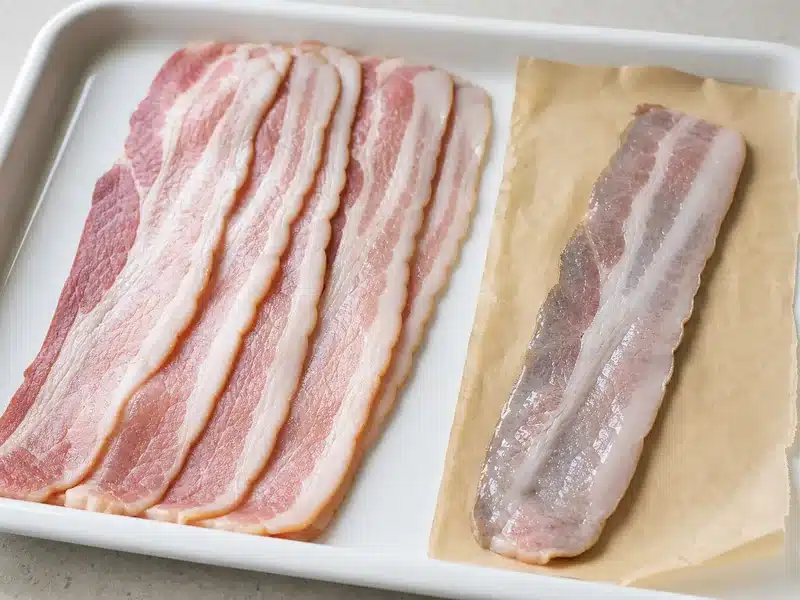
Use clean tongs to lift one edge if the bacon surface looks unusually wet.
A tacky or slimy film that does not belong to ordinary fat is a strong discard sign, especially with a sour, rotten, or sulfur-like odor.
- Slick film: discard bacon when tackiness turns slimy rather than simply fatty.
- Strong sour odor: do not taste meat that smells rotten or sulfur-like.
- Mold or gray-green patches: throw away the package instead of trimming or rinsing it.
- Swollen or leaking pack: clean any shelf touched by raw juices.
Raw bacon naturally ranges from pink to red with white or cream fat. Some fading can come from oxygen exposure, but color cannot prove that meat is safe.
A vacuum pack that is swollen, leaking, or spraying liquid when opened should be discarded. Clean any refrigerator surface touched by raw juices with the food-safe cleaner you normally use.
Do not taste bacon to confirm spoilage. Cooking destroys many microbes, but it cannot repair rancid fat or make every toxin from poor storage harmless.
How Long Can Bacon Stay Out of the Refrigerator?
A breakfast plate left on the table until lunch has crossed a different limit from a package stored cold for three days.
Perishable bacon should not remain above 40°F for more than 2 hours. Cut that limit to 1 hour when the air temperature is above 90°F.
A grocery trip uses all of its warm travel time
Use an insulated bag when errands may push the trip toward two hours. Hot weather shortens that limit to one hour.
A breakfast buffet needs active temperature control
Keep cooked bacon above 140°F, or return it to refrigeration within the time limit. A plate sitting at room temperature does not stay protected because it was cooked.
A buffet built around a breakfast casserole needs the same clock for its bacon tray, even when guests return for several servings.
A counter is not a safe thawing tool
Discard bacon that warmed for too long even when the center still feels cool. The outer slices can enter the unsafe range first.
Reheating cannot reset the record. A normal smell after unsafe warm storage does not provide evidence that the bacon stayed safe.
Cooked bacon that remained within the limit can return to the refrigerator in a covered container. If you are planning a seafood plate, the bacon-wrapped scallop pairings can help use a fresh, properly handled batch.
When bacon is close to the end of its window, cook only the amount you can eat soon. Cooking does not reset meat that already smelled sour or felt slimy.
Cooked bacon also changes faster when it sits in grease. Drain it, cool it, and store it in a shallow container so the strips do not stay warm in the middle.
Sources
These sources provide the bacon clocks and thawing limits used in this guide.
- USDA Bacon and Food Safety for raw, cooked, dry-cured, opened, frozen, and thawed bacon guidance.
- USDA Freezing and Food Safety for freezer quality and safe thawing methods.
- FoodSafety.gov food waste and safety guidance for the 2-hour rule.
Specialty bacon can carry a different label direction. Use that product's storage statement rather than assigning it the ordinary raw-bacon clock.
Frequently Asked Questions
You can refreeze bacon thawed in the refrigerator if it stayed within its safe window, though quality may drop. Cook bacon thawed by cold water or microwave before freezing it again.
True dry-cured sliced or slab bacon has a different storage table. Confirm the label because ordinary wet-cured refrigerated bacon does not gain that longer pantry life.
A sell-by date guides store rotation. USDA advises using or freezing bacon within seven days of purchase, while an earlier manufacturer use-by date should be followed.
Move it into a shallow covered container and refrigerate it promptly. Do not leave it on the counter for hours while waiting for it to become fully cold.
Gray-green patches together with slime or off odor support a discard decision. Iridescent light reflection can occur on sliced meat, so judge the package, surface, odor, and storage history together.

Carrie is a food writer and editor with more than 15 years of experience. She has worked for some of the biggest names in the food industry, including Bon Appétit, Food & Wine, and Martha Stewart Living.
As the Editor in Chief of EpicureDelight, Carrie oversees all of the content on the site. She also manages the team of contributing writers and editors, who help to create delicious recipes, helpful tips, and informative articles that you’ll find on the site.
A native of the Chicago area, Carrie is passionate about all things food. She loves trying new restaurants and experimenting with new recipes in her kitchen. She’s also a graduate of the Culinary Institute of America, so she knows a thing or two about food!