
Cornstarch is the best all-purpose flour-free thickener for a quick gravy, pan sauce, or soup. Start with about half as much cornstarch as the flour in the recipe, mix it with cold liquid, and add it near the end of cooking.
Arrowroot keeps acidic sauces clear, tapioca gives pie filling a glossy body, xanthan gum works without heat, and gelatin creates a firm set after cooling. These five choices are useful, but they are not spoon-for-spoon copies of flour.

The best flour thickener substitute depends on whether you need glossy sauce, hearty stew, or clear gel. Cornstarch is strongest for quick sauces, while potato starch, arrowroot, and puree each change texture differently.
Which Thickening Agent Fits the Cooking Job?
| # | Thickener | Starting point | Best use | Main limit |
|---|---|---|---|---|
| 1 | Cornstarch | 1 tablespoon per cup for a medium sauce | Gravy, soup, stir-fry sauce | Can turn chalky or break under long heat |
| 2 | Arrowroot starch | 2 teaspoons per cup | Fruit sauce and acidic glaze | Can feel slick in dairy and weaken with long cooking |
| 3 | Tapioca starch | 4 teaspoons per cup | Pie filling and freezer-bound sauce | Too much creates an elastic texture |
| 4 | Xanthan gum | ⅛ teaspoon per cup | Cold dressing and low-starch sauce | A small excess feels slimy |
| 5 | Gelatin or agar | Follow the package for the firmness needed | Panna cotta, glaze, jelly, chilled terrine | Sets after cooling rather than thickening gravy |
Choose by the texture you want at the table, not by the white powder in the package. A glossy stir-fry sauce, a clear berry filling, a cold dressing, and a sliceable dessert need different kinds of structure.
The ratios below are starting points. Sugar, acid, fat, cooking time, and the amount of water in the dish can move the final amount up or down.

Mix starch with cold liquid before it meets the hot pan. A cold slurry separates the particles so they can swell evenly instead of locking into dry lumps.
A slurry does not copy the toasted flavor of a flour roux. When a gravy depends on browned flavor, cook the fat and aromatics first, add the main liquid, then use the starch slurry only for the final texture.
Pourable sauces need a starch or gum
Cornstarch, arrowroot, and tapioca swell with heat, while xanthan can add body without a simmer. Choose by clarity and serving temperature before adjusting the dose.
Sliceable desserts need a gel or a cooled starch set
Gelatin and agar form a network as the food cools. Pie filling also firms during cooling, but it remains spoonable rather than becoming a clean jelly.
1. Cornstarch for Fast Sauces and Gravy
Use cornstarch when you need a smooth gravy or sauce in minutes and the dish will be served soon after cooking.
Cornstarch is the easiest first choice because it thickens quickly and has little flavor. If a recipe uses 2 tablespoons of flour for one cup of liquid, begin with 1 tablespoon of cornstarch.
- Whisk the starch with an equal amount of cold water until no dry spots remain.
- Bring the main liquid to a gentle simmer before the slurry enters.
- Pour the slurry in a thin stream while stirring across the whole pan.
- Cook for about one minute, then stop when the sauce coats a spoon.
Do not boil the sauce hard for several minutes. Long heat and strong stirring can thin a cornstarch sauce after it first looks finished.
If the sauce tastes dusty, it needs brief cooking rather than another dose.
Cornstarch produces a glossy, semi-clear finish instead of the opaque body of a flour roux. It is not the same as finely milled corn flour, so use the measured corn flour alternatives only when the recipe truly calls for flour.
If the starch box is empty, compare the cornstarch swaps before changing the amount.
2. Arrowroot for Acidic or Freezer-Bound Dishes
Arrowroot works well in lemon sauce, berry glaze, and other acidic liquids because it stays clear and neutral. Use about 2 teaspoons per cup of liquid, or replace cornstarch with the same measured amount when a tested recipe allows it.
Add an arrowroot slurry during the last minute of cooking. A long boil can undo the thickening, so remove the pan from the heat once the sauce coats a spoon.
Dairy is arrowroot's weak point. It can give milk or cream sauce a slippery texture, which makes cornstarch a safer pick for pudding and cream gravy.
Arrowroot also handles freezing better than many ordinary starch sauces. For more options when the package runs out, the ranked clear-starch option separate good sauce choices from baking-only swaps.
3. Tapioca Starch for Pie Filling and Chewy Body
Tapioca starch gives fruit filling a bright gloss and holds water well after freezing and thawing. Start with 4 teaspoons per cup of liquid when you need a medium body, then let the hot mixture cook until the cloudy color clears.
This starch makes a more elastic gel than cornstarch. That stretch helps a juicy pie slice hold together, but too much can make gravy feel stringy.
Let a tapioca-thickened pie cool completely before slicing. The filling keeps setting as it cools, so a hot slice looks looser than the final texture.
Tapioca starch is a fine powder, while quick-cooking tapioca contains small granules. The granules need resting time to absorb liquid and can leave a dotted texture, so do not swap the two forms without checking the recipe.
For a fruit filling, mix tapioca starch with the recipe's sugar before adding wet fruit. The dry mixture spreads the starch more evenly, and a steady bubble during baking shows that the filling has reached the heat it needs to thicken.
If tapioca is missing, choose from the tested chewy starch backup by whether the dish needs gloss, stretch, or freezer stability.
4. Xanthan Gum Works in Cold Sauces at Tiny Doses
Xanthan gum needs a much smaller amount than starch. Begin with ⅛ teaspoon per cup of dressing, sauce, or blended soup because another small pinch can change the texture sharply.
Sprinkle it into moving liquid while whisking or blending. Dumping the powder onto a still surface creates soft clumps that are hard to break apart.
- Use it cold in vinaigrette that keeps separating.
- Use it lightly in a pureed soup that needs more body.
- Use it after tasting when a sauce is already reduced.
- Stop early because the mixture thickens further as the gum hydrates.
A blender creates the strongest movement, but a whisk works for a small vinaigrette. Mixing xanthan with a little oil, sugar, or another dry ingredient first can spread the particles before they touch water.
A gummy or rope-like mouthfeel means the dose went too far. Dilute the mixture with more of its original liquid rather than adding acid or salt, which changes flavor but does not remove the gum.
Old or damp gum can disperse unevenly, so check the package against xanthan gum storage.
Guar gum and psyllium behave differently, so use the ratios in our gum-thickener backups or guar gum alternatives instead of guessing from package size.
5. Gelatin and Agar Build a Cooled Set
Gelatin is for a cooled set, not a bubbling gravy. It works in panna cotta, mousse, chilled glaze, and savory terrine because the liquid firms after it cools.
Gelatin gives a tender chilled set that melts near body temperature. Sprinkle it over cold liquid first, let the granules hydrate, then warm them gently.
Boiling can weaken the gel, while dry granules dropped into hot liquid form stubborn beads.
Agar creates a firmer vegetarian gel and usually needs a brief boil to activate. It sets more brittle than gelatin and does not melt on the tongue in the same way, so follow its package ratio instead of copying the gelatin dose.
Fresh pineapple, papaya, and some other fruits contain enzymes that can weaken gelatin. Cooked fruit or agar may work better when the dessert must hold a clean slice.
Check an old packet before relying on it for a dessert centerpiece. Our gelatin storage explains how moisture and age affect the powder, while the agar swap list covers vegetarian setting options.
How Do You Fix a Thickener That Lumps, Stays Thin, or Turns Gummy?
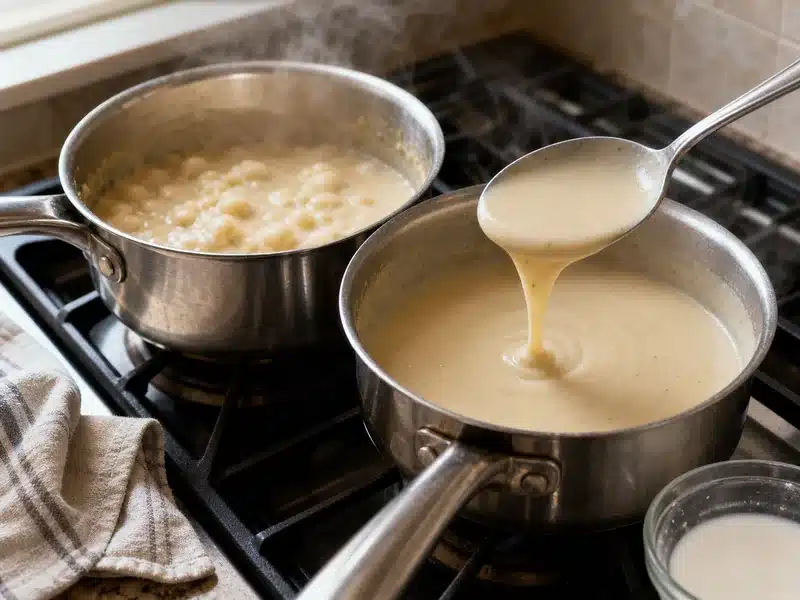
Fix the symptom you can see instead of adding another full spoonful. A lumpy sauce needs smoothing, a gummy sauce needs dilution, and a thin starch sauce may only need enough heat to activate.
Strain dry lumps before making a fresh slurry
Pressing lumps against the pan only breaks their wet outside. Strain them out, mix a small fresh slurry with cold liquid, and whisk it into the smooth hot base.
Give a thin starch sauce enough heat
A cloudy sauce may not have reached the temperature needed for the starch to swell. Bring it to a gentle simmer before deciding that the dose failed.
Dilute gumminess with the original base
Whisk in stock, milk, juice, or another unthickened base one tablespoon at a time. Acid and salt may distract from the slick texture, but they cannot remove excess gum.
Judge pie filling and gels after cooling
A hot fruit filling remains loose, while gelatin stays fluid until it chills. Wait for the intended serving temperature before correcting a set that may already be strong enough.
Potato flakes can rescue some creamy soups without a slurry, but they also add potato flavor. Use that route only when the dish can support it, then check the measured potato flake alternatives if you need a neutral result.
Add any correction in small steps. A sauce can move from thin to pasty faster than it can move back.
Judge the sauce at its serving temperature whenever possible. Starch sauces usually feel thicker after a few minutes of cooling, while a gelatin mixture stays loose until it has chilled long enough to set.
Cornstarch is the fastest choice for a glossy beef gravy. Use 1 tablespoon per cup of liquid and simmer the slurry for about one minute.
A starch slurry thickens sauce but does not copy the toasted flavor of a roux. Brown the fat and aromatics first, then add a cold starch slurry near the end.
The ingredients are naturally free of wheat, but cross-contact can happen during processing. Check a certified gluten-free label when celiac safety matters.
Xanthan gum works in cold liquid. Start with ⅛ teaspoon per cup and blend before deciding whether it needs another pinch.
Yes, but use a tested recipe because two full doses can create a rubbery result. Tapioca and cornstarch sometimes share pie-filling work when both gloss and a clean slice matter.

Carrie is a food writer and editor with more than 15 years of experience. She has worked for some of the biggest names in the food industry, including Bon Appétit, Food & Wine, and Martha Stewart Living.
As the Editor in Chief of EpicureDelight, Carrie oversees all of the content on the site. She also manages the team of contributing writers and editors, who help to create delicious recipes, helpful tips, and informative articles that you’ll find on the site.
A native of the Chicago area, Carrie is passionate about all things food. She loves trying new restaurants and experimenting with new recipes in her kitchen. She’s also a graduate of the Culinary Institute of America, so she knows a thing or two about food!



