Pistachios can keep good quality for several months in a cool pantry when the package stays sealed. Once opened, refrigeration or freezing slows the oil oxidation that causes stale and rancid flavors.
Smell the nuts before tasting them. Fresh pistachios smell sweet and nutty, while rancid ones can smell like paint, old cardboard, or bitter oil even when the shells still look normal.

Pistachios stop tasting fresh when their oils oxidize. Keep opened nuts airtight and cold, then use smell, snap, and one small taste before adding them to a recipe.
Why Do Pistachios Go Rancid Before the Shell Looks Bad?
Pistachios contain enough fat to develop rancid flavors when oxygen reaches the oil. This change can begin without mold, dark spots, or a broken shell.
Air changes the oil
Opening a factory bag replaces its protected atmosphere with fresh air each time you reach inside. A loose clip slows spills but does not give the oil the same protection as an airtight jar or well-sealed freezer bag.
Heat and light speed the change
A clear container beside a sunny window looks attractive but exposes the nuts to warmth and light. UC Davis advises keeping pistachios cool because lower temperatures slow oxidation and rancidity.
A cabinet beside the oven also warms and cools repeatedly. Choose a darker shelf away from the stove if pantry storage is the only practical option.
Shells help but do not stop oxygen
An intact shell covers part of the nut and slows handling damage. It does not create an airtight seal, so in-shell pistachios can still turn stale or rancid in warm storage.
Shelled nuts expose more surface and usually lose quality sooner after opening. Treat the shell as light protection, not a replacement for a container.
The separate guide to pistachio taste describes the flavor when the nuts are fresh. This storage article owns the point where oxidation changes that flavor.
How Long Do Pistachios Last?
The printed date remains the best starting point for an unopened commercial package. After opening, reset the decision around shell state, container seal, temperature, and how quickly you will use the nuts.
| State | Pantry | Refrigerator | Freezer | Best practice |
|---|---|---|---|---|
| Sealed commercial package | Follow the printed date in a cool cabinet | Useful in a warm home | Useful for long storage | Leave the factory seal intact |
| Opened in-shell nuts | Several months only under cool, dry conditions | Better for slow use | Best beyond a season | Use an airtight container |
| Opened shelled nuts | Use within weeks for best flavor | Preferred for routine storage | Best for a large bag | Remove excess air |
| Ground pistachios or flour | Shortest pantry window | Keep cold after opening | Freeze extra portions | Label the opening date |
| Frozen airtight nuts | Not applicable | Not applicable | A year or longer of good quality | Warm while still sealed |
These ranges describe quality, not a promise for every bag. Warm rooms, repeated opening, and bulk-bin handling can shorten them.
Bulk nuts have an unknown oxygen and handling history before purchase. Buy only what you will use soon, and transfer them to your own clean container as soon as you get home.
Other nuts need their own clock because fat content and package state differ. Compare almond shelf life instead of giving every nut the same date.
How Can You Tell Whether Pistachios Are Fresh or Rancid?
Open the container and smell before you toast or season anything. Heat can make a weak nut smell stronger for a moment, but it cannot remove rancid oil.
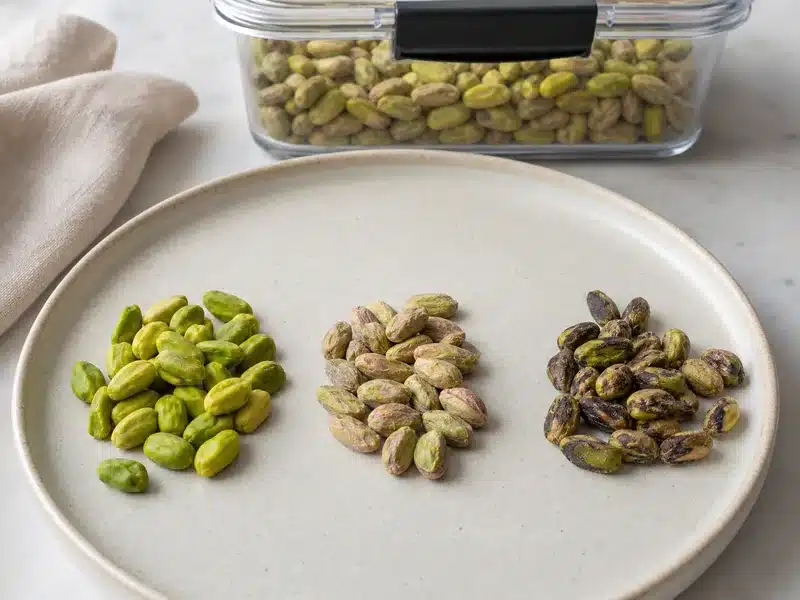
Next, break one shelled nut. A fresh pistachio should snap or crunch, while a stale nut may bend, feel soft, or crumble without a clean break.
Taste one small piece only after the smell and appearance pass. Bitter, paint-like, soapy, or harsh oily flavor is a rancidity stop sign.
Fresh
Sweet nutty aroma, clean green-tan kernel, crisp snap, and a mild buttery finish.
Stale but clean
Weak aroma and softer crunch with no bitterness, moisture, pests, or mold. Use soon in a texture-tolerant recipe.
Rancid
Paint, cardboard, bitter oil, soap, or a harsh lingering aftertaste. Discard the batch instead of masking it.
Natural green, yellow, purple, and tan shades do not prove spoilage on their own. Smell and taste matter more unless discoloration comes with moisture or fuzzy growth.
Why Do Roasted or Flavored Pistachios Hide Staleness?
Roasting changes oil aroma, and salt reaches the tongue before the nut center. A heavily seasoned pistachio can therefore taste lively even when the inner meat has started to flatten.
Break one nut away from the coating
Split the kernel and smell the center rather than the seasoning dust. Then chew a small uncoated edge long enough to notice bitterness after the salt fades.
Judge roasted or flavored pistachios from the broken center. Salt, chile, sugar, and smoke can hide weak aroma on the surface but cannot remove rancid oil inside.
Clumped seasoning points to moisture
A few loose spice clusters may be normal, but wet paste, droplets, or coating stuck around the bag needs closer inspection. Moisture changes this from simple staleness to a possible spoilage problem.
Ground nuts need faster action
Pistachio flour and finely ground nuts expose far more oil to air than whole kernels do. Seal them tightly, keep them cold, and inspect them before each baking session.
If a recipe needs a different nut flour, hazelnut flour substitutes and peanut flour substitutes explain how flavor and fat can change the result.
How Should You Store Pistachios in the Refrigerator or Freezer?
Refrigeration and freezing slow oxidation, but an open cold container can collect condensation in a warm kitchen. Pistachios also absorb strong odors from nearby food.
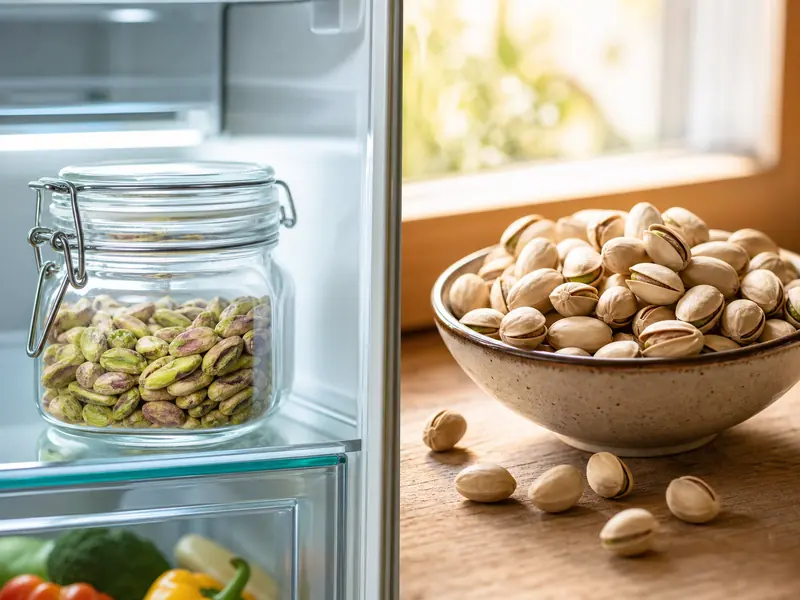
- Choose an airtight jar or freezer bag. The seal blocks air, moisture, and refrigerator odors.
- Remove extra air. Press air from a freezer bag without crushing the nuts.
- Label the package. Record the opening or freezing date so older nuts get used first.
- Warm the sealed container. Open it only after the nuts reach room temperature, then return unused portions to cold storage promptly.
Divide a large bag into small portions if you use pistachios slowly. You can open one portion without warming and exposing the full supply every time.
Keep pistachios away from onion, garlic, smoked food, and uncovered sauces. Their oil can carry those odors into desserts even when the nuts remain crisp.
When Should You Throw Pistachios Away?
A flat-tasting nut may still be a quality problem, but visible contamination changes the decision. Do not route these batches into toast, sauce, or baking.
- Fuzzy growth or mold odor: discard the entire affected package.
- Water droplets or wet kernels: stop tasting and discard when the moisture source is unknown.
- Silky webbing or insects: seal the bag and inspect nearby grains, flour, and nuts for pantry pests.
- Chewed or punctured packaging: treat the contents as contaminated.
- Unknown bulk-bin debris: do not wash and dry the nuts for later use.
Clean the shelf and check neighboring packages after a pest finding. Moving one infested bag without inspecting the pantry leaves the source in place.
A closed shell with no kernel inside is an agricultural defect, not spoilage. Discard that shell and judge the rest of the batch by aroma, texture, contamination, and taste.
How Can You Use Stale but Clean Pistachios?
Only use this section after the nuts pass the smell, contamination, and bitterness checks. Rancid pistachios cannot be repaired by heat, sugar, or stronger seasoning.
| Condition | Best route | Why it works | Do not use when |
|---|---|---|---|
| Crisp but weak aroma | Short gentle toast, then garnish | Warmth can wake a clean mild aroma | Any bitter or paint-like smell appears |
| Slightly soft | Chopped crust or cookie | Small pieces reduce the need for a whole-nut snap | The nuts feel damp |
| Dry and crumbly | Ground sauce or filling | The recipe does not depend on visible crunch | Oil smells old or harsh |
| Clean mixed crumbs | Baking within a day | Quick use limits more air exposure | Package history is unknown |
Whole garnish demands the freshest texture because every nut is easy to judge. Chopping can make clean stale nuts useful, but it cannot turn them into a premium topping.
Do not hide rancidity with almond extract or marzipan. The bitter oil remains in the finished food.
A dessert may suggest the right color and aroma, but pistachio ice cream flavor cannot repair old nuts. Use a fresh ingredient instead.
If no pistachios pass the test, choose a deliberate recipe substitute such as almonds. A fresh different nut produces a better result than an old pistachio used only to match the label.
Sources
These sources support the temperature, oxidation, frozen-quality, and general food-date guidance used above.
- UC Davis Postharvest Research and Extension Center: Pistachio
- USDA FSIS: Food product dating
- U.S. FDA: Are you storing food safely?
Frequently Asked Questions
Opened nuts keep best for weeks in a pantry and longer when airtight and cold, but the room and package state change the range. Use smell, snap, and one small taste rather than the date alone.
Refrigeration is a good choice after opening, especially in a warm home or when the bag will last more than a few weeks. Keep the container airtight to block moisture and odors.
Yes. UC Davis reports that frozen pistachios can retain quality for a year or longer when packaged well.
Yes. Rancid oil can leave a bitter, paint-like, or soapy finish through the whole recipe, and heat will not remove it.
No. Pistachios are greener, sweeter, and more delicate, while the taste of Brazil nuts is richer and more oily.
They have different flavor and shelf-life needs. Check walnut oil substitutes before changing the fat in a recipe.

Carrie is a food writer and editor with more than 15 years of experience. She has worked for some of the biggest names in the food industry, including Bon Appétit, Food & Wine, and Martha Stewart Living.
As the Editor in Chief of EpicureDelight, Carrie oversees all of the content on the site. She also manages the team of contributing writers and editors, who help to create delicious recipes, helpful tips, and informative articles that you’ll find on the site.
A native of the Chicago area, Carrie is passionate about all things food. She loves trying new restaurants and experimenting with new recipes in her kitchen. She’s also a graduate of the Culinary Institute of America, so she knows a thing or two about food!