Whole potatoes usually last about 1 to 2 weeks at ordinary room temperature and much longer in a dark, cool, humid place with steady airflow.
A purpose-built storage area near 32°F to 40°F can hold sound mature potatoes for months, while 40°F to 50°F is better when you plan to fry them. Most warm home kitchens should use the shorter practical window.
Cut raw potatoes need refrigeration, and cooked potatoes should be used within 3 to 4 days. Discard potatoes that are extensively green, bitter, moldy, wet and soft, or heavily sprouted and shriveled.
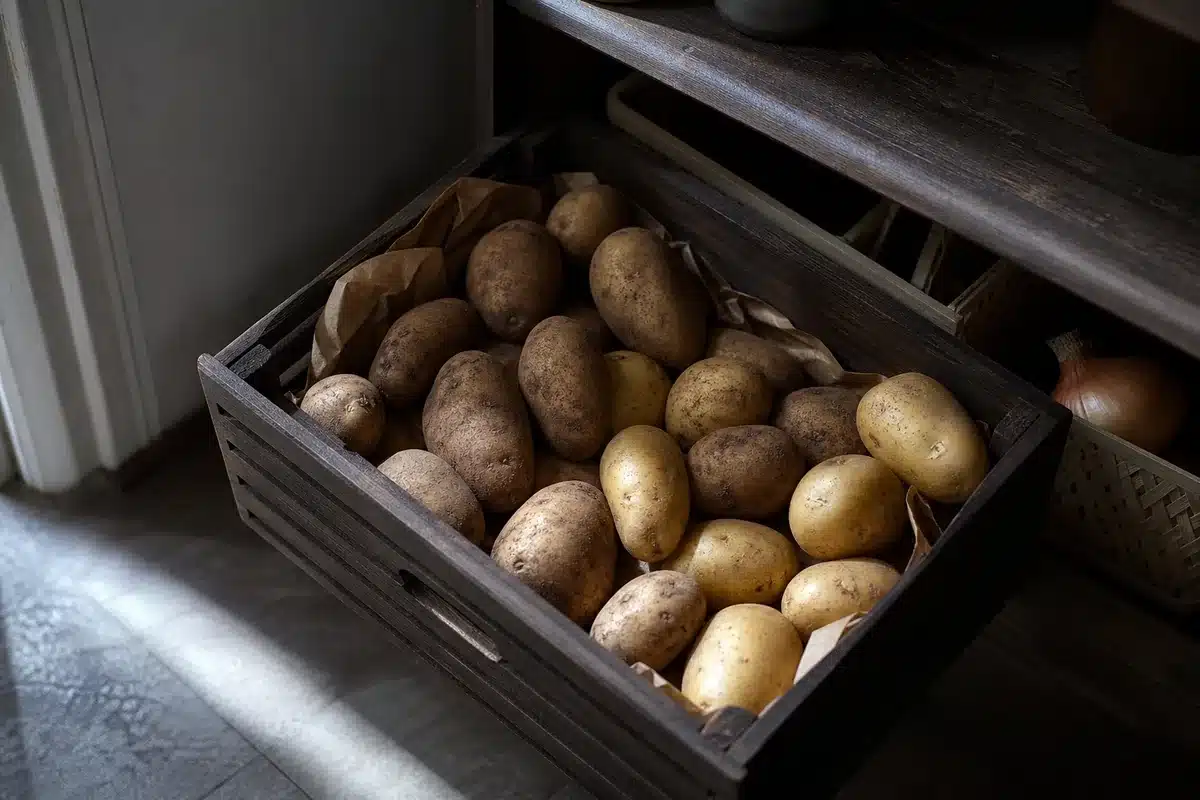
Potatoes last longest in a cool, dark, dry place, but green skin, deep rot, slime, or bad odor means they should be discarded. Small sprouts can be removed only when the potato is still firm.
How Long Do Potatoes Last in Different Storage Conditions?
| Location | Practical window | Best use | Main tradeoff |
|---|---|---|---|
| Warm kitchen | About 1 to 2 weeks | Small bag used soon | Faster sprouting and softening |
| Cool dark pantry near 45°F to 50°F | Several weeks or longer | Potatoes that may be fried | Needs real temperature control |
| Cold storage near 32°F to 40°F | Several months under ideal conditions | Long storage of mature sound tubers | Cold sweetening can darken fried potatoes |
| Refrigerator | Longer than a warm counter | Homes with no cool storage | Texture and frying color may change |
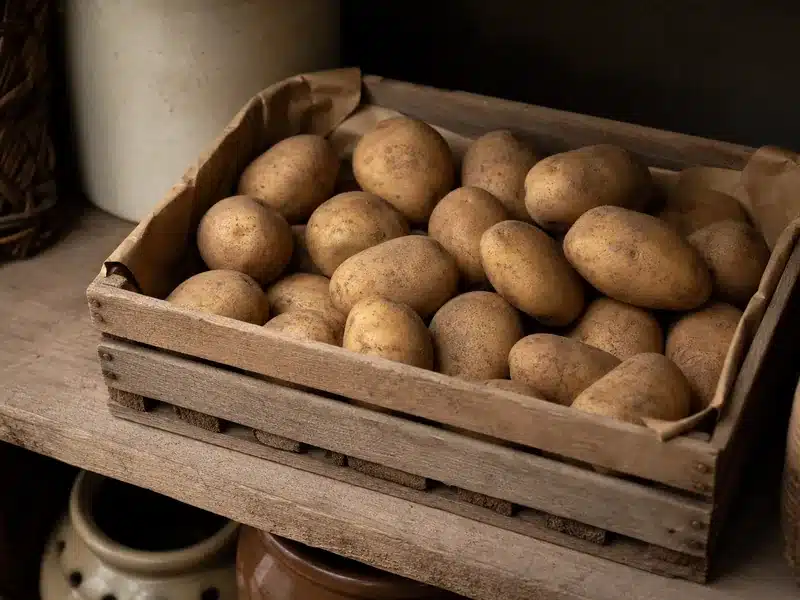
A bright warm counter and a dark ventilated crate create different lives for the same bag of potatoes.
Warmth encourages sprouting and moisture loss, while light triggers greening. Trapped dampness gives rot a place to move from one potato to the next.
Keep potatoes in a paper bag, slatted crate, basket, or perforated container. A sealed plastic bag traps condensation and makes one wet potato more likely to affect the rest.
Do not wash potatoes before storage because lingering surface moisture encourages decay. Brush off loose dry soil, then wash each potato just before you cut or cook it.
Freshly harvested potatoes store longer after their skins cure. University of Minnesota Extension recommends a ventilated area near 60°F to 65°F for about 10 days when the skin still rubs away easily, while grocery potatoes usually arrive after this step.
Set damaged potatoes aside for the first meal because cuts and bruises shorten storage. Do not let a wet or deeply cut tuber sit in the center of an otherwise sound crate.
Sweet potatoes are a different root with different curing and storage needs. Check the sweet potato storage rather than carrying this white-potato clock across.
Why Do Potatoes Turn Green in the Light?
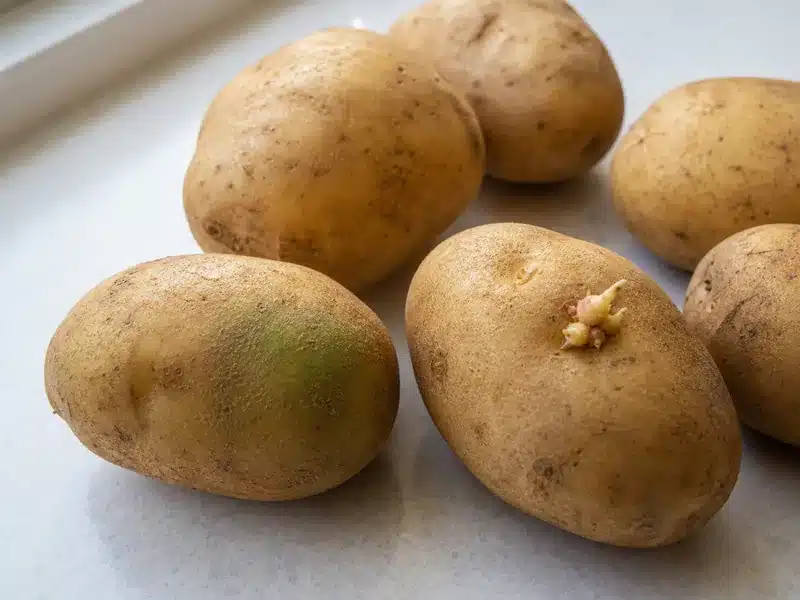
A green patch can appear on a potato that still feels firm.
Light produces harmless green chlorophyll, but that color warns that natural glycoalkaloids may also have increased near the skin and sprouts.
A small green patch can be a trim decision
Cut away the green area and the flesh beneath it when the potato remains firm and has no bitter taste.
Extensive green or bitter flesh is a discard decision
Throw away a potato that is widely green, strongly bitter, heavily sprouted, or shrunken. Normal cooking may not remove enough glycoalkaloid from a badly affected tuber.
Never eat potato sprouts. Remove a small sprout and its eye from an otherwise firm potato, then peel the tuber and inspect the flesh before cooking.
Do not use cooking as the only protection because normal baking, boiling, and frying may not remove enough glycoalkaloid from a badly affected potato. A bitter taste is a stop sign, not a flavor to cover with salt.
Prevent greening by blocking light while preserving airflow. A dark towel over an open basket can help, but do not wrap the potatoes so tightly that moisture collects.
If a specific variety no longer suits the dish, compare the texture of a waxy potato backup rather than using a green or bitter tuber.
When no sound potato remains, a firm root-vegetable replacement is a better cooking decision than trimming a badly green tuber.
A firm baby potato with sound skin can move straight into a planned meal. An air-fried baby potato dish uses small potatoes quickly before new eyes begin to lengthen.
Can You Eat Potatoes with Sprouts or Green Skin?
Sort a stored bag one potato at a time instead of judging every tuber by the worst one.
Firmness, color, odor, sprouts, and wet damage together show whether a potato is still useful.
Firm with a small eye
A firm potato with one short sprout can often be peeled and trimmed deeply around the eye. Inspect the flesh after cutting.
Soft and wrinkled
Minor shriveling means moisture loss and poor texture. Heavy shriveling with long sprouts or bitterness supports discarding the potato.
Wet rot or mold
Leaking spots, foul odor, fuzzy growth, hollow collapse, or dark wet flesh mean the potato should be discarded.
Remove a bad potato and check every neighbor that touched it. Dry the container if moisture collected, and return only firm dry potatoes.
Small surface cuts can dry into harmless scars, while deep wet wounds become entry points for rot. Use a sound but nicked potato before the unmarked potatoes in the bag.
Do not taste a raw bitter piece to test safety. If the cooked potato tastes distinctly bitter, stop eating it and discard the rest.
How Long Do Cut and Cooked Potatoes Last?
| State | Storage | Useful clock | Main action |
|---|---|---|---|
| Whole and raw | Dark, ventilated storage | Depends on temperature | Inspect before use |
| Peeled or cut | Cold water in refrigerator | About 24 hours for texture | Cook promptly |
| Cooked | Covered shallow container | 3 to 4 days | Chill within 2 hours |
| Left warm | Above 40°F | 2 hours, or 1 hour above 90°F | Discard after the limit |
The knife breaks the skin that helped a whole potato hold moisture and resist contamination.
Peeled and cut potatoes need cold storage, while cooked potatoes become ordinary leftovers with a 3-to-4-day refrigerator clock.
Change the water if cut potatoes release heavy starch, but do not treat water as long storage. A day in cold water is a meal-prep step, not a new shelf life.
Cooked potato dishes can contain dairy, meat, eggs, or sauce that need the same or a shorter leftover decision. For serving ideas, the potato side ideas helps plan sound potatoes before they decline.
A leftover baked potato also needs prompt chilling. Use the baked potato pairings for the plate, then return leftovers to the refrigerator within 2 hours.
Can You Freeze Potatoes?
A raw potato can turn watery, dark, and mealy after freezing because ice crystals rupture its cells.
If the goal is quick mash rather than frozen chunks, a potato-flake replacement may give a steadier texture than a raw-frozen tuber.
Blanching or cooking first slows enzyme activity and gives the potato a more useful texture after thawing.
- Choose firm potatoes with no green areas, rot, or heavy sprouting.
- Peel and cut them into even pieces for the planned dish.
- Blanch the pieces until partly tender, then cool them quickly in ice water.
- Dry the surface so the pieces freeze separately rather than in an icy mass.
- Freeze in one layer, then move the firm pieces to a dated freezer bag.
Cooked mashed, roasted, or twice-baked potatoes can also be frozen in meal-size portions. Richer preparations often tolerate thawing better than plain boiled chunks.
Thaw prepared potatoes in the refrigerator or cook suitable frozen pieces directly. That same cold-to-pan approach protects texture in frozen vegetable dinners, while counter thawing leaves a large container warm for too long.
For a meal built around a prepared potato, use the twice-baked potato pairings or smashed potato pairings after the storage check passes.
Freezing preserves a sound potato, not a failing one. Trim or discard defects before preparation and never freeze a bitter or rotten tuber.
Sort potatoes before storage if one bag has damp spots. One wet potato can spread odor and moisture to the rest of the bag.
Sources
These sources support the temperature, greening, sprout, and leftover decisions used above.
- University of Minnesota Extension potato guidance for curing, cold storage, frying temperatures, greening, and sprouts.
- University of Minnesota potato greening diagnosis for light exposure, bitterness, and extensive green areas.
- USDA leftovers and food safety for prompt chilling and the 3-to-4-day refrigerator window.
Home storage rarely matches a commercial cold room, so use the shorter kitchen window when you cannot verify temperature and humidity.
Frequently Asked Questions
Store them in separate ventilated containers. Moisture and gases around the two foods can speed quality loss when they share a tight space.
No. Brush off loose dry soil and wash the potatoes just before use so stored skins do not stay damp.
Refrigeration can extend storage when no cool pantry exists, but cold sweetening may make potatoes brown faster during high-temperature frying. Store frying potatoes closer to 40°F to 50°F when possible.
Remove the soft potato and inspect every neighbor for moisture, mold, odor, and weak spots. Keep only firm dry potatoes and clean the container if it became damp.
Check the flesh after removing each sprout and eye. If dark channels, wet tissue, or a bitter odor extends inward, discard that potato.

Carrie is a food writer and editor with more than 15 years of experience. She has worked for some of the biggest names in the food industry, including Bon Appétit, Food & Wine, and Martha Stewart Living.
As the Editor in Chief of EpicureDelight, Carrie oversees all of the content on the site. She also manages the team of contributing writers and editors, who help to create delicious recipes, helpful tips, and informative articles that you’ll find on the site.
A native of the Chicago area, Carrie is passionate about all things food. She loves trying new restaurants and experimenting with new recipes in her kitchen. She’s also a graduate of the Culinary Institute of America, so she knows a thing or two about food!