Fresh mozzarella in liquid usually lasts only a few days after opening, while low-moisture blocks and shreds last longer under their package directions. Moisture, salt, packaging, and exposed surface area make one clock impossible for every form.
Keep all mozzarella at 40°F or colder. Discard soft mozzarella that stayed warmer than 40°F for more than 2 hours, or more than 1 hour when the air was above 90°F.

Identify the mozzarella form before using a storage number. Keep fresh cheese in its directed liquid, wrap low-moisture blocks closely, and discard the whole soft cheese after mold, slime, or unsafe warm storage.
How Long Does Mozzarella Cheese Last?
Three packages can say mozzarella while holding cheeses with very different amounts of water. Fresh balls feel soft and often sit in whey or brine, low-moisture blocks are firmer, and shreds expose hundreds of small cut surfaces.
| Form | Unopened | After opening | Main risk |
|---|---|---|---|
| Fresh in liquid | Use by package guidance | Usually a few days | Souring, slime, mold, liquid changes |
| Low-moisture block | Use by package guidance | Often 2 to 3 weeks when closely wrapped | Dry cut face and surface mold |
| Sliced or shredded | Use by package guidance | Days to a few weeks by product | Fast drying, wet clumps, broad mold spread |
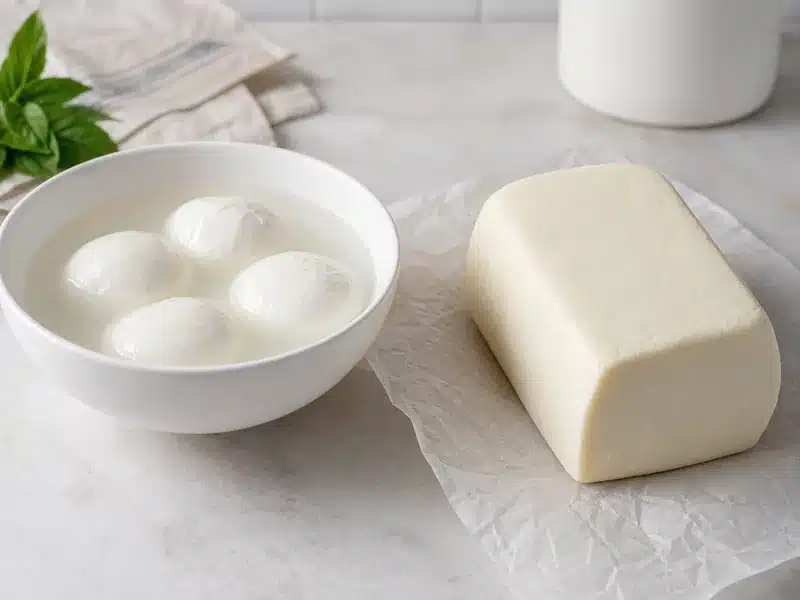
Water gives fresh mozzarella its tender milky bite, but it also supports faster quality loss after opening. The drier block has a longer working window, while shreds lose quality quickly because air reaches so much surface.
The package remains the best product-specific clock. Salt level, preservatives, liquid, atmosphere, and seal differ by brand, so a printed date from one product cannot control another.
Use the separate rules for shredded cheese when a bag of shreds is the main problem. Do not apply a block's opened time to fresh cheese just because both melt on pizza.
How Long Can Mozzarella Sit Out?
A Caprese platter can be well inside its printed date and still become unsafe after a long warm service. The package date assumes correct refrigeration, so temperature history can end that window early.
A normal room gives you 2 hours total
Return fresh mozzarella to refrigeration before 2 hours at room temperature. Add separate serving periods together because chilling the platter again does not erase its earlier warm time.
A tomato and mozzarella meal may include other perishable dishes, but each one needs its own clock and cold storage. Put out a smaller plate and refill it from the refrigerator.
Outdoor heat cuts the limit to 1 hour
When the air is above 90°F, discard soft mozzarella after 1 hour without reliable cooling. Shade slows direct heating but does not replace a cold tray or insulated container.
Power outages create the same time-and-temperature question. Smell cannot prove that a soft cheese remained safe after the refrigerator warmed.
Do not freeze warm-abused mozzarella as a rescue. Freezing pauses change from the point it begins, but it cannot reverse an unsafe service period.
How Should You Store Fresh and Low-Moisture Mozzarella?
A cut fresh ball dries along its exposed white edge, while a low-moisture block forms a firm rind on its cut face. The two problems need different storage methods.
Follow the fresh-cheese liquid directions
Return unused fresh mozzarella to its original liquid when the package tells you to keep it submerged. Use clean tongs or a spoon because every reach can move crumbs and microbes into a moist food.
- Date the container. Mark the day the package opened.
- Seal it promptly. Limit drying and refrigerator odors.
- Use an interior shelf. Keep it away from the warmer door.
- Remove one portion. Close the main container before the meal begins.
A homemade salt solution is not an automatic copy of the original liquid. Follow the maker's directions if the package liquid was spilled, since excess salt can damage texture without restoring the earlier handling history.
Wrap a low-moisture cut face closely
Press cheese paper or parchment against the cut face, then place the wrapped block in a sealed container. This limits drying without trapping loose refrigerator moisture directly against the cheese.
A firmer provolone-style cheese or scamorza replacement may keep a baked dish drier, but each substitute follows its own package and mold rules.
How Can You Tell Whether Mozzarella Has Gone Bad?
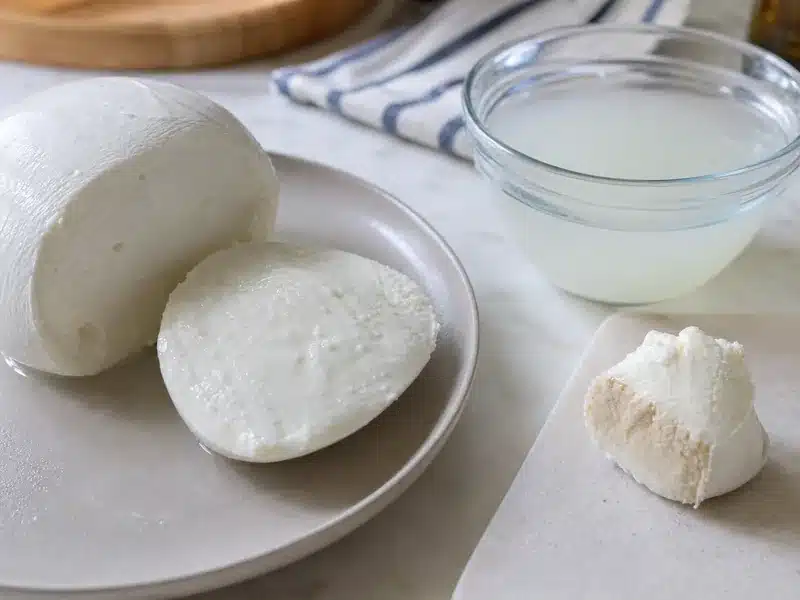
Start with the clock, then inspect the cheese under good light. A dry edge can be quality loss, while slime, mold, a sour yeasty odor, or active gas changes the verdict.
A dry block edge may still be usable
A pale firm edge can form when a low-moisture block is poorly wrapped. Trim the dry part only when the rest of the cheese is inside its safe clock and has no mold, slime, or off odor.
Dry shreds lose stretch and brown faster, which can matter before they spoil. The cheese may still suit a cooked dish when the bag is dry, clean-smelling, and free of growth.
Slime and sour odor are discard signs
A slick film on fresh mozzarella differs from its normal moist surface. Bubbles, thick ropy liquid, a swollen package, or a sour yeast smell add further evidence that the cheese should go.
Cloudy liquid alone needs package context because some fresh mozzarella starts in milky whey. Compare it with the product's original appearance and use the full set of clues.
Mold on soft mozzarella means discard the whole cheese
Do not cut around mold on fresh, sliced, or shredded mozzarella. Mold can spread below the visible spot in moist or divided cheese, unlike the more limited surface growth sometimes handled on a hard aged block.
The same caution applies to other soft cheeses. Goat cheese storage explains why a moist crumbly cheese does not get the hard-cheese trim rule.
Cottage cheese has a different container and texture, yet its high-moisture handling offers another useful comparison with cottage cheese storage.
Do not taste around a suspicious patch. Pink, blue, green, black, or fuzzy growth is enough reason to discard the package.
Can You Freeze Mozzarella Cheese?
A tender Caprese slice exposes every texture change, while a pizza topping can tolerate extra water and a little crumbling. That use difference decides whether freezing mozzarella is worthwhile.
Ice crystals break the cheese structure, especially in a high-moisture fresh ball. Thawed cheese can release liquid, feel grainy, or lose the smooth elastic bite it had before freezing.
| Future use | Freezer fit | Preparation |
|---|---|---|
| Caprese or cold slices | Poor | Use fresh instead |
| Pizza or hot sandwich | Good | Portion, wrap, thaw cold, and blot |
| Lasagna or baked pasta | Good | Expect some released water |
| Fresh creamy filling | Mixed | Choose a replacement if texture is central |
Freeze only sound cheese before its refrigerator window ends. Divide it into recipe-size portions, wrap each portion closely, place them in a dated freezer bag, and thaw overnight in the refrigerator.
Pat away released water before melting. A fontina-style replacement may give a stronger melt with less water, while a ricotta alternative may fit a baked filling better.
A creamy stracciatella substitute can suit a cold plate when thawed fresh mozzarella has lost the texture you wanted. Choose the replacement for the dish rather than forcing damaged cheese into the wrong role.
How Can You Use Mozzarella Before It Spoils?
A fresh ball opened two days ago may still be inside its label window when it stayed cold, covered, and clean. Check the opening date and warm time before planning how to use it.
- Use the best texture cold. Sound fresh mozzarella belongs in a salad or sandwich while its surface is tender.
- Move slight drying to a cooked use. Melt hides a firm edge better than a raw plate does.
- Freeze only a named portion. Save cheese when you already know the hot dish that can accept it.
- Discard failed cheese. Heat cannot make moldy, slimy, or warm-abused mozzarella safe.
Return unused cheese with a clean utensil and close the lid immediately. The goal is to finish a good product while it still has the texture you bought it for.
Shreds with ordinary dryness can go into a hot dish soon. Wet clumps, broad discoloration, a yeasty smell, or visible growth mean the bag should be discarded instead.
If the dish needs a completely different cheese behavior, compare the melt and moisture tradeoffs of cheese curd replacements. Do not mix questionable mozzarella into good cheese to avoid waste.
Sources
- FoodSafety.gov power-outage guidance for soft cheese
- UConn Extension cheese storage guidance
- Oregon State University Extension cheese safety guidance
The package directions remain the first source for an exact product because fresh and low-moisture mozzarella use different formulas and seals.
Check the maker's directions. Plain water can pull flavor and salt from the cheese, while an improvised brine can make it too salty.
No. Low-moisture products may begin cream or pale yellow. Patchy growth, slime, sour odor, and an unsafe clock matter more than one expected color.
Dates often describe quality, but the package, temperature history, and maker's wording control the decision. Discard a swollen, leaking, moldy, or warm-stored pack.
Ice crystals damaged its protein and water structure. Use the thawed cheese in a melted dish where crumbling matters less.
No. Slime is a discard sign, and rinsing the surface does not remove growth or contamination that may extend into the cheese.

Carrie is a food writer and editor with more than 15 years of experience. She has worked for some of the biggest names in the food industry, including Bon Appétit, Food & Wine, and Martha Stewart Living.
As the Editor in Chief of EpicureDelight, Carrie oversees all of the content on the site. She also manages the team of contributing writers and editors, who help to create delicious recipes, helpful tips, and informative articles that you’ll find on the site.
A native of the Chicago area, Carrie is passionate about all things food. She loves trying new restaurants and experimenting with new recipes in her kitchen. She’s also a graduate of the Culinary Institute of America, so she knows a thing or two about food!