Radish tastes crisp, juicy, and mildly sweet at first, followed by mustard-like peppery heat. The heat can stay gentle or turn sharp depending on variety, growing weather, age, and how the root is cut or cooked.
Raw radish keeps the strongest snap and pungency. Roasting softens both while raising sweetness, and pickling replaces part of the peppery bite with salt and acid.

Fresh radish starts juicy and lightly sweet, then develops a peppery mustard finish after cutting or chewing. Cool-grown roots tend to stay crisper, while roasting softens heat and pickling adds a tart, salty direction.
What Does a Radish Taste Like?
The snap comes first
A fresh radish breaks cleanly and releases cool water. That moisture makes the first second feel mild even when the root becomes sharp after chewing.
A little sweetness sits in the middle
Natural sugars give a faint sweet note beneath the green root flavor. The sweetness is easier to notice in a young mild radish than in an old or heat-stressed one.
Peppery heat builds after cell damage
The mustard-like sensation rises as chewing breaks more cells. It can reach the nose like horseradish sauce, but common red radish usually feels shorter and less forceful.
The finish may include a light sulfurous aroma. A clean peppery finish is normal, while rotten, fermented, or sewage-like odor is not.
Why Does Cutting a Radish Make It Taste Hotter?
Intact radish cells keep glucosinolates and the enzyme myrosinase apart. A knife or your teeth damages the cells and lets the enzyme help form pungent isothiocyanates.
Those compounds create a mustard and horseradish direction rather than chile heat. Capsaicin is not the main cause of radish pungency.
Thin slices spread less radish through each bite but expose more cut surface. Thick pieces deliver more juice and a larger burst of pungency when you chew.
Grating creates the most damaged surface and makes the aroma appear quickly. Use grated radish soon because the fresh pungent character changes as it sits.
Crushing with salt damages even more cells and pulls out water. That method creates a wet, sharp condiment rather than the clean snap of a sliced root.
Cold slows your perception and keeps the texture firm, but it does not switch off the plant reaction. A cold slice can still taste hot once you chew it fully.
Why Do Weather and Age Change a Radish's Texture?
Radishes prefer cool growing conditions. Hot weather and water stress can make common garden radishes sharper, tougher, or woody before they reach the plate.
Cool growth supports a wet snap
A firm root with dense, moist flesh gives the cleanest contrast between water and pepper. It may still be pungent because variety and maturity also matter.
Heat stress can raise harshness
Warm conditions can speed growth stress and increase hot flavor. The center may also lose the tight juicy structure that makes raw radish pleasant.
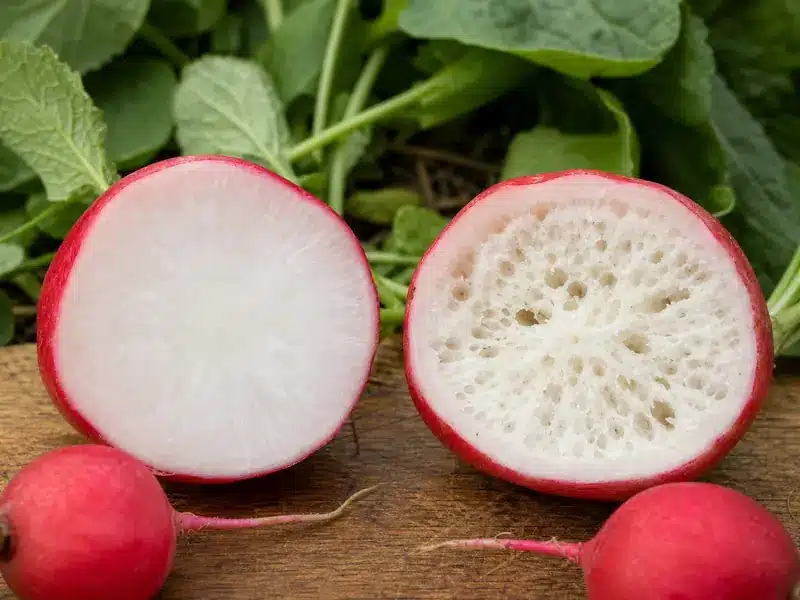
Late harvest can leave pithy flesh
An older root may look large but break with a dry, spongy center. Pithiness is a quality problem, and size alone cannot prove whether a radish will be mild.
Use a pithy but clean radish in a cooked dish only if the flavor still tastes acceptable. Discard it when softness comes with slime, mold, or an off odor.
How Do Radish Varieties Differ in Flavor and Heat?
Variety gives a useful starting range, but weather and maturity can move one root outside the expected pattern. Use the broader radish replacement choices only when the recipe can accept a different root.
| Type | Typical flavor | Texture | Useful role |
|---|---|---|---|
| Red globe | Peppery with mild sweetness | Crisp and juicy | Salad, garnish, snack |
| Daikon | Often milder and cleaner | Dense and watery | Pickle, soup, grated condiment |
| Watermelon radish | Gentle pepper and light sweetness | Crisp with a firm center | Raw slices and colorful garnish |
| Black radish | Stronger and earthier | Firm and dense | Roasting, grating, strong salads |
| Korean radish | Sweet, peppery, and sturdy | Dense with good crunch | Kimchi, soups, braises |
A mild daikon can still turn sharp near the top or after stressful growth. A red globe radish can taste gentle when young, cool-grown, and well watered.
Within one root, the top and tip may not taste identical. Sample the section you plan to serve before seasoning the entire batch.
Horseradish belongs to a related pungent flavor family, but its root and prepared sauce have a stronger use pattern. Check horseradish replacements rather than treating ordinary radish as an equal in every sauce.
A turnip has more earthy density and less fresh mustard snap. The turnip replacement range belongs in cooked dishes where that difference can work.
How Do Raw, Roasted, and Pickled Radishes Taste Different?
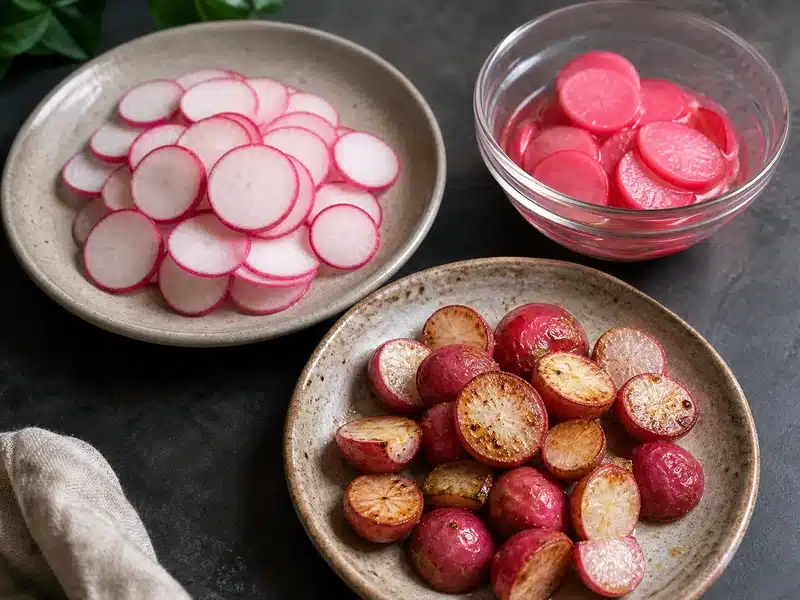
Preparation changes both the plant reaction and the way moisture moves through the root. Divide one bunch if you want to compare without blaming variety.
| Method | Heat | Texture | New leading flavor | Best fit |
|---|---|---|---|---|
| Raw slice | Strongest | Maximum snap | Juice then mustard | Salad and garnish |
| Roasted | Much softer | Tender with browned edges | Mild sweetness | Warm side dish |
| Quick-pickled | Tempered | Crisp but less rigid | Vinegar and salt | Rich sandwiches and bowls |
| Simmered | Low | Soft and juicy | Mild broth flavor | Soup and braise |
Roasting drives off water and softens the raw mustard edge. Browning can make the remaining sugar easier to notice.
Pickling adds acid while salt draws water from the cells. The result stays brighter and crisper than a cooked radish, but it no longer shows the plain root flavor.
Vinegar choice changes the finish as well. A sharp option from the white vinegar range keeps the pickle direct, while a milder vinegar leaves more room for sweetness.
Warm spices can shift attention away from the root. Choose from the pickling spice alternatives only when the intended pickle needs that aroma.
How Can You Make Radishes Taste Less Spicy?
Slice it thin for a smaller dose
A thin slice gives less radish in each bite and spreads it among other ingredients. Peppery greens from the watercress replacement range can reinforce heat, so keep the first salad mild.
Use cold water for texture
A short cold-water soak can improve crispness and wash some pungency from cut surfaces. A long soak also removes flavor, so stop when the bite becomes pleasant.
Add fat for a rounder finish
Butter, yogurt, cream cheese, or a mild oil softens the sharp perception. Fat does not remove the compounds, but it changes how the heat spreads across the mouth.
Use salt with a clear purpose
Salt draws water and can soften a shredded radish mixture. Apply it close to serving when you want crisp slices, or earlier when draining water is part of the dish.
A small sweet element can balance pungency without removing it. Use fruit or a light dressing when you want contrast, and avoid enough sugar to turn the radish into a hidden garnish.
How Can You Tell Whether Radishes Are Fresh?
Inspect the root before choosing raw or cooked use. A clean but pithy radish can be a quality disappointment, while slime and mold create a discard decision.
- Keep for raw use. The root is firm, smooth, clean-smelling, and wet inside.
- Cook soon. The root has minor softness or pithiness but no slime, mold, or off odor.
- Trim surface damage. Remove a small dry crack only when the surrounding flesh stays firm and clean.
- Discard. Slime, fuzzy growth, deep rot, or a foul fermented odor means the root is finished.
Remove leafy tops before refrigerator storage because the leaves pull water from the root. Keep the roots cold and protected from drying so their snap lasts.
Young leaves are edible and taste green and peppery. Larger rough leaves often improve with cooking, which is a separate texture decision from the root.
Sources
These sources support the growing-condition and pungency explanations.
- University of Minnesota Extension radish guide
- Seasonal Effects of Glucosinolate and Sugar Content Determine Radish Pungency
- Japan International Research Center for Agricultural Sciences radish chemistry paper
Frequently Asked Questions
Cell damage creates pungent isothiocyanates related to mustard and horseradish flavor. Capsaicin is not the main source.
Peeling can remove some outer pungency and toughness, especially from stronger varieties. The inner flesh still carries its own flavor.
A clean hollow or pithy center is usually a quality problem. Discard the root if the cavity comes with slime, mold, rot, or foul odor.
They become milder and softer, but they stay juicier and less starchy than potatoes. Browned edges can add a similar savory comfort.
They can taste peppery and slightly bitter, especially when mature. Cooking softens their rough texture and sharp green flavor.

Carrie is a food writer and editor with more than 15 years of experience. She has worked for some of the biggest names in the food industry, including Bon Appétit, Food & Wine, and Martha Stewart Living.
As the Editor in Chief of EpicureDelight, Carrie oversees all of the content on the site. She also manages the team of contributing writers and editors, who help to create delicious recipes, helpful tips, and informative articles that you’ll find on the site.
A native of the Chicago area, Carrie is passionate about all things food. She loves trying new restaurants and experimenting with new recipes in her kitchen. She’s also a graduate of the Culinary Institute of America, so she knows a thing or two about food!