The best sauce for chicken kiev adds acid, herbs or a savory base, because the kiev already carries its own garlic and herb butter.
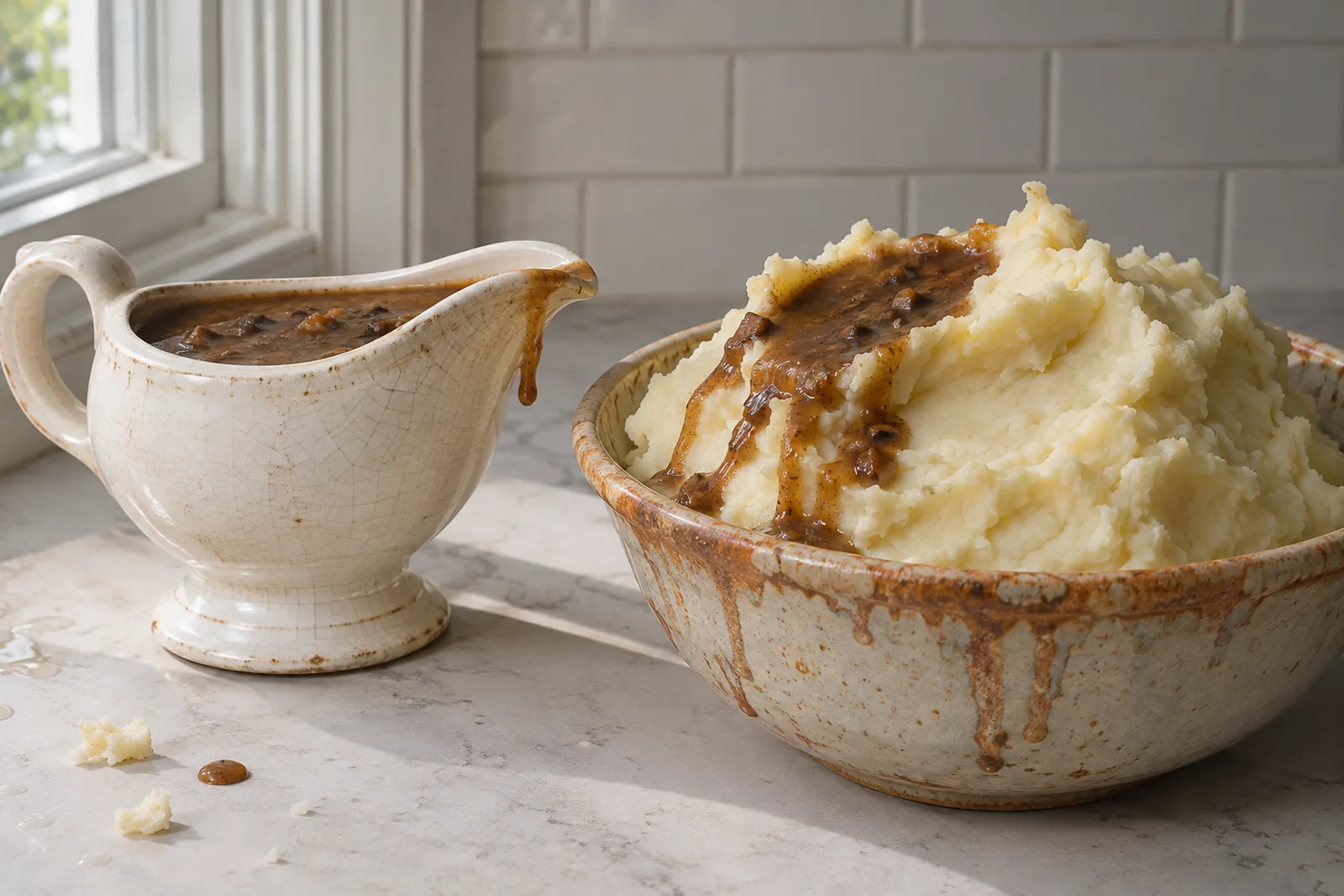
Chicken gravy, creamy mushroom sauce and chimichurri are the three safest picks, and they cover the usual plates: gravy or mushroom sauce over mashed potatoes, chimichurri beside a green salad.
Béarnaise and hollandaise taste good with a kiev but add a second layer of butter, so they go on as small spoonfuls.
Cook the chicken to 165°F (74°C) in the thickest part before any sauce reaches the plate.
Chicken kiev already has garlic butter inside, so the best sauces add acid, herbs or a savory base: gravy, mushroom sauce and chimichurri lead the 12.
What makes a sauce work with chicken kiev?
A chicken kiev is chicken breast in a crisp crumb, wrapped around a core of cold garlic and herb butter.
The plate already has its fat, salt and garlic, so a sauce earns its place by doing one of three jobs the kiev cannot do for itself.
- Cuts the richness. Lemon, vinegar, wine, horseradish heat or a big handful of raw herbs make the butter taste lighter.
- Carries flavor to the side. Mashed potatoes, rice and green beans taste mild next to a garlicky kiev, and a gravy or cream sauce gives them something to hold on to.
- Leaves the crumb crisp. Spoon the sauce beside or under the kiev, because a ladle poured over the top turns the crust soft.
Most sauces below do one of these jobs well and the others only a little.
Pick the job the plate is missing first, then choose the sauce, instead of starting from the one you like best.
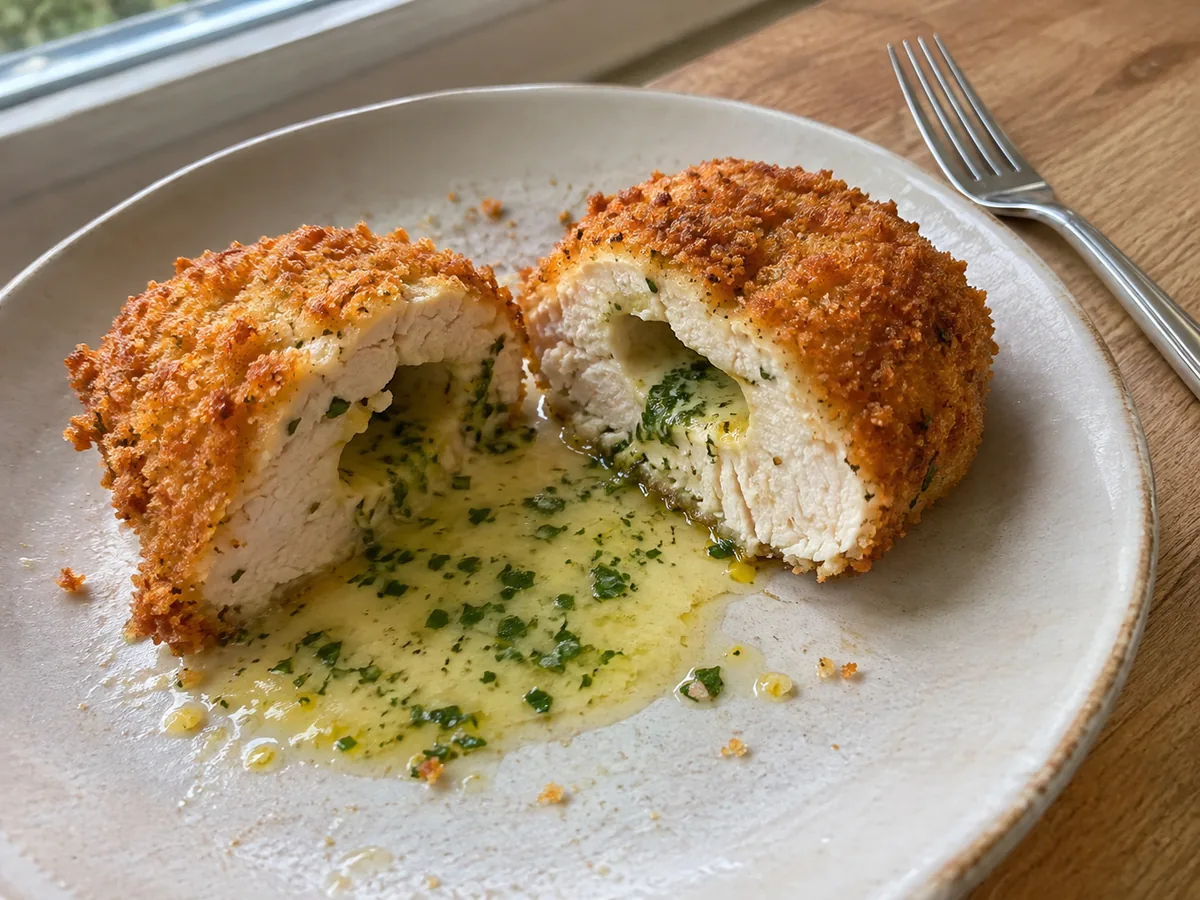
The cut-open kiev above shows why the sauce question is mostly about butter.
When the pocket runs onto the plate, the kiev has made its own sauce, and anything you add should sharpen it or stretch it over the sides instead of repeating it.
The recipes below are starting points that make enough for about four kievs.
Taste each one before serving and adjust the salt and acid, because a sauce that tastes slightly too sharp on its own usually lands right beside buttery chicken.
Which sauce goes best with chicken kiev?
The table lists all 12 sauces in the order of the sections that follow, from the comfort sauces that soak into potatoes to the cold, sharp ones that cut through the butter.
| # | SAUCE | What It Adds | Best For | PREP |
|---|---|---|---|---|
| 1 | Chicken Gravy | Savory body for potatoes | Mashed potatoes | Easy |
| 2 | Creamy Mushroom Sauce | Cream and earthy mushroom | Comfort plate | Medium |
| 3 | Cheese Sauce | Melted cheddar richness | Kids | Easy |
| 4 | Lemon Butter Sauce | Wine and lemon acid | Light plate | Easy |
| 5 | Hollandaise Sauce | Silky yolk and lemon | With asparagus | Involved |
| 6 | Béarnaise Sauce | Tarragon and vinegar bite | Special dinner | Involved |
| 7 | Chimichurri | Raw parsley and vinegar | With salad | Quick |
| 8 | Mango Chutney | Sweet, sour and spiced fruit | Jar shortcut | Quick |
| 9 | Mint Sauce | Sharp vinegar and mint | Sweet-sour fans | Quick |
| 10 | Horseradish Sauce | Sharp heat in cool cream | Heavy plates | Quick |
| 11 | Garlic Sour Cream Sauce | Cool, tangy garlic | Garlic lovers | Quick |
| 12 | Lemon Dill Mayonnaise | Lemon and herbs, served cold | Cold kiev | Quick |
Six of the twelve are cold sauces that take a few minutes to stir together.
Hollandaise and béarnaise are the two rated Involved, because they need a whisk and steady attention, and mushroom sauce is the Medium one that takes longest on the stove.
For a mashed-potato dinner, choose chicken gravy or creamy mushroom sauce. For a lighter plate with salad or green beans, chimichurri does more to cut the garlic butter than any warm sauce.
The four sections below split the 12 sauces by what they do on the plate.
The warm sauces carry the potatoes and vegetables, the butter and egg sauces add a restaurant touch, and the cold sauces cut through the butter.
What gravy and creamy sauce go with chicken kiev?
These three sauces suit a plate built around mashed potatoes.
The same three also answer the two searches that come up most for this dish: what gravy goes with chicken kievs, and what creamy sauce works for a kiev in the UK.
1. Chicken Gravy
A light chicken or onion gravy is the answer to what gravy goes with chicken kievs.
Beef gravy overpowers the chicken, and the crumb and butter already supply the richness, so the gravy only has to add savory body and soak into the potatoes.
UK readers mean a brown, stock-based sauce by gravy, and that is the style here.
- Start with fat. Melt 2 tablespoons of butter in a small pan, or spoon up the garlic butter that leaked onto the baking tray.
- Cook the flour. Whisk in 2 tablespoons of plain flour and stir for about a minute, until it smells faintly nutty and loses its raw taste.
- Add the stock slowly. Pour in 1 cup (240 ml) of warm chicken stock a splash at a time, whisking after each, so no lumps form.
- Simmer and season. Cook for a few minutes until it coats the back of a spoon, then season with salt, pepper and a few drops of gravy browning if the color looks pale.
Leaked kiev butter gives the roux a garlic and herb flavor that plain butter lacks.
When the kievs are frozen and dinner is a quick job, ready-made gravy or granules made to the label work well, and a spoonful of the pan juices stirred in brings them closer to homemade.
2. Creamy Mushroom Sauce
Creamy mushroom sauce is the usual answer to a creamy sauce for chicken kiev in the UK.
Earthy mushrooms and cream soften the garlic and herb butter without adding acid.
Brown 8 ounces (225 g) of sliced mushrooms in 1 tablespoon of oil over medium-high heat until the liquid they release has boiled away and the slices turn golden.
Crowded or stirred too early, the mushrooms steam and stay gray.
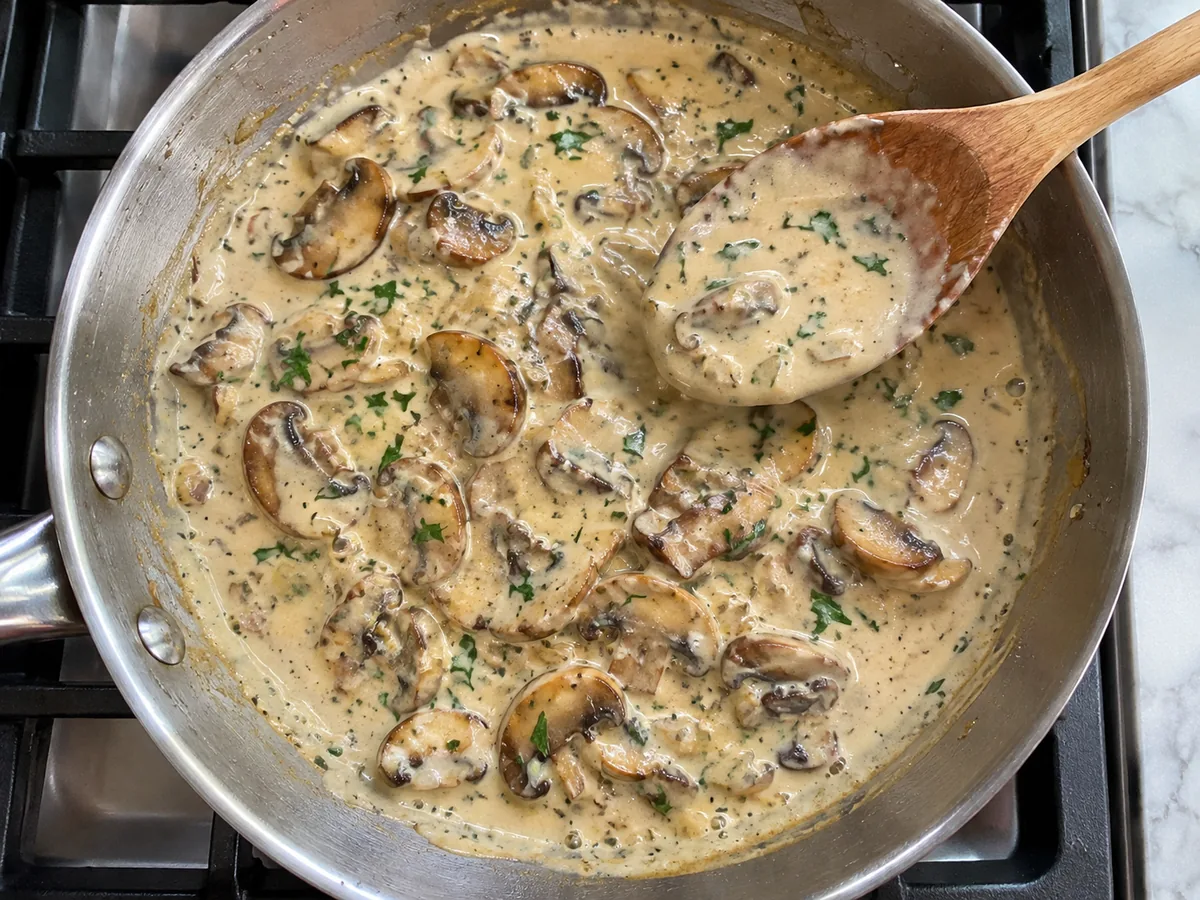
Cook 1 chopped shallot in the pan for a minute, loosen the browned bits with a splash of white wine or stock, then add ¾ cup (180 ml) of double cream and simmer until it coats a spoon.
UK cooks use double cream, and US cooks can use heavy cream in its place with a slightly longer simmer.
Finish with salt, pepper and chopped parsley.
A can of condensed cream of mushroom soup thinned with a few tablespoons of milk is the shortcut.
The canned soup tastes saltier than the homemade version, so skip extra salt until you have tasted it.
3. Cheese Sauce
Cheese sauce is a béchamel with melted cheddar stirred in, so it suits plates where kids or cheese lovers want the kiev to feel like comfort food.
Melt 2 tablespoons of butter, whisk in 2 tablespoons of flour and cook for a minute, then whisk in 1 cup (240 ml) of milk a little at a time and simmer until it coats a spoon.
The béchamel base is the part to get right, because a lumpy base cannot be rescued once the cheese goes in.
Take the pan off the heat before adding ¾ cup (about 85 g) of grated mature cheddar a handful at a time, since cheese that boils turns grainy and oily.
Season with salt, pepper and a pinch of nutmeg.
It is the richest sauce on the list, so keep the sides green, and see the cheddar cheese swaps if the block is missing.
Which butter and egg sauces suit chicken kiev?
Butter sauce on a butter-filled chicken is the main risk in this pairing.
These three work when the portion is small and the flavor is sharp: lemon butter leans on wine and lemon, and the two egg sauces go on as a spoonful at the side.
4. Lemon Butter Sauce
Lemon butter sauce is mostly wine and lemon with a little butter, which keeps it from doubling the garlic butter inside the kiev.
Simmer ½ cup (120 ml) of dry white wine with 1 minced shallot until about 2 tablespoons remain, squeeze in the juice of half a lemon, then take the pan off the heat and whisk in 3 tablespoons of cold butter one piece at a time.
The finished sauce should look glossy and lightly thickened.
Stir in chopped parsley at the end.
Once the butter is in, keep the pan below a simmer, because the sauce splits into oil and liquid when it boils.
A spoonful per kiev is plenty, and it suits a light plate of green beans or asparagus.
5. Hollandaise Sauce
Hollandaise is yolks, lemon and butter whisked into a thick, warm sauce, and it works with a kiev when the spoonful is small.
Butter added too fast, or a bowl that runs too hot, is what splits it, so the method matters more than the amounts.
- Warm the yolks. Whisk 2 pasteurized egg yolks with 1 tablespoon of lemon juice and 1 tablespoon of water in a bowl set over barely simmering water until the mixture turns pale and the whisk leaves tracks.
- Add the butter off the heat. Lift the bowl away and whisk in ½ cup (115 g) of warm melted butter in a thin stream.
- Season. Add salt and a pinch of cayenne, and serve it soon after making it, because it does not hold or reheat well.
- Rescue a split sauce. Whisk 1 tablespoon of warm water into a fresh yolk in a clean bowl, then whisk the broken sauce in a drop at a time.
The rescue step is worth planning before the sauce splits, not after.
Keep a spare yolk at hand, because a fresh yolk in a clean bowl is the base the broken sauce gets whisked into.
6. Béarnaise Sauce
Béarnaise is hollandaise made with a tarragon and shallot vinegar reduction instead of lemon juice, and its anise-like herb note is what makes it the better egg sauce for a garlicky kiev.
Simmer ¼ cup (60 ml) of white wine vinegar with 1 minced shallot and 1 tablespoon of chopped fresh tarragon until about 2 tablespoons remain, strain it, and use that reduction in place of the lemon juice and water in the hollandaise method above.
Stir in 1 more teaspoon of chopped tarragon at the end.
If fresh tarragon is hard to find, chervil is the closest swap.
Béarnaise has a sharper edge than hollandaise, so it stands up to the crumb and the garlic better.
Hollandaise, béarnaise and homemade mayonnaise use yolks that stay raw or only lightly cooked, so the recipes here call for pasteurized yolks. FDA advises pasteurized shell eggs or pasteurized egg products for recipes with raw or undercooked eggs, and children, older adults, pregnant women and people with weakened immune systems face the highest risk.
The three fresh sauces that follow use no egg at all, so the warning does not apply to them.
Of the cold creamy sauces after that, only the homemade mayonnaise uses a raw yolk.
Which fresh sauces cut the richness of chicken kiev?
Raw herbs and fruit give a kiev a bright counterpoint, and none of these three needs a cream base.
7. Chimichurri
Chimichurri is a raw parsley, vinegar and oil sauce that does the opposite of cream: it makes the kiev taste lighter. Stir these together in a small bowl until it is spoonable and green, with more herb than oil:
- Parsley: ½ cup (about 30 g) of finely chopped flat-leaf parsley
- Garlic: 1 minced clove, plus 1 teaspoon of dried oregano and a pinch of chili flakes
- Oil and acid: ¼ cup (60 ml) of olive oil and 2 tablespoons of red wine vinegar, with salt to taste
One clove is enough because the kiev already carries garlic, and ten minutes of resting softens the raw bite.
Spoon the chimichurri onto the plate beside the chicken, since an oily sauce runs off the crumb.
Vinegar dulls the green color within a few hours, so stir it together the day you serve it.
Red wine vinegar is the usual acid here, and the red wine vinegar substitutes cover an empty bottle.
8. Mango Chutney
Mango chutney is sweet, sour and gently spiced, and a spoonful beside the kiev gives the garlic butter a fruit counterpoint.
A jar is the quick route, and when the jar is empty, apricot jam stirred with lime juice and grated ginger is the closest of the mango chutney swaps.
For a fresh version, pulse 1 ripe mango with 1 seeded jalapeño, 1 teaspoon of grated ginger, the juice of 1 lime and a handful of cilantro until chunky, then add salt.
The fresh version is closer to a salsa than a cooked chutney, so it tastes brighter and does not keep as long.
Leave out garlic, because the kiev has plenty, and serve chutney on its own rather than on top of gravy or cream sauce.
9. Mint Sauce
Mint sauce is the sharpest and sweetest sauce on the list.
Mint sauce is a lamb classic, so it is the least expected match for a kiev, and it suits cooks who like a sweet-sour dab beside fried chicken.
Stir 1 tablespoon of sugar into 2 tablespoons of hot water until it dissolves, add ¼ cup of finely chopped fresh mint and 2 tablespoons of white wine vinegar, and let it stand for 10 minutes.
Taste it and add sugar a pinch at a time until the sharpness and the sweetness balance.
Use a teaspoon or two per kiev, because mint overpowers chicken quickly.
Which cold, creamy sauces go with chicken kiev?
Sauces built on sour cream or mayonnaise stay beside the chicken, so the crumb stays crisp, and they work with a kiev served hot or sliced cold.
10. Horseradish Sauce
Horseradish sauce brings sharp, clean heat that fades quickly, which is why it cuts the butter so well.
Stir 1 tablespoon of prepared horseradish into ½ cup (120 g) of sour cream, add a squeeze of lemon, 1 teaspoon of chopped chives and a pinch of salt, then add more horseradish a teaspoon at a time until the heat suits you.
The heat sits mostly in the nose, and creamy versions soften the punch with dairy.
When the jar is empty, the horseradish substitutes give a similar bite.
Freshly grated root is hotter than a jar and is strongest right after grating, so stir in the lemon or a splash of vinegar soon after if you want it to stay sharp.
11. Garlic Sour Cream Sauce
Garlic sour cream sauce is a cool, tangy dip for people who want even more garlic with the crunch.
Stir 1 small grated garlic clove into ½ cup (120 g) of sour cream with 1 tablespoon of chopped dill and a squeeze of lemon, season with salt, then let it rest for 10 minutes.
Raw garlic gets stronger as it sits, so taste before serving and use half a clove if the kiev is already heavy on garlic.
12. Lemon Dill Mayonnaise
Mayonnaise is the simplest cold sauce here, and it earns its place with leftover kiev sliced cold into a sandwich or a packed lunch.
Stir 1 teaspoon of lemon juice and 1 tablespoon of chopped dill or chives into ½ cup (120 g) of mayonnaise and add black pepper.
To make mayonnaise yourself, use a pasteurized egg yolk for the reason in the warning above. A neutral oil lets the lemon and dill show.
- Mix the base. Whisk 1 pasteurized egg yolk with 1 teaspoon of Dijon mustard and 2 teaspoons of lemon juice.
- Add the oil slowly. Pour in ¾ cup (180 ml) of neutral oil a few drops at a time, whisking constantly.
- Speed up. Once the mixture thickens and turns pale, move to a thin stream and finish with salt and the dill.
The Dijon mustard helps the oil and yolk stay mixed, and the Dijon mustard substitutes cover an empty jar.
That covers all 12 recipes, and each one stands alone.
The sauces work harder when each one is matched to the side it will sit beside, which is the next decision at the table.
Which sauce goes with which side?
Mashed potatoes, rice and green beans taste mild beside a garlic butter kiev, so the sauce is what flavors the side.
A good match makes the plate taste finished and a bad one fights the garlic butter.
- Mashed potatoes: chicken gravy or creamy mushroom sauce, which both soak in.
- Rice or buttered noodles: mushroom sauce or cheese sauce, which coat the grains.
- Green beans, asparagus or peas: lemon butter sauce, or a small spoonful of hollandaise or béarnaise.
- Green salad or raw vegetables: chimichurri or mango chutney, which keep the plate light.
- Potato wedges or chips: garlic sour cream sauce as a dip.
- Cold sliced kiev in a sandwich or lunch box: lemon dill mayonnaise or horseradish sauce.
One warm sauce for the potatoes is usually enough, with a cold sauce on the side if the plate needs brightness.
Two warm sauces on one plate compete with each other and with the garlic butter.
The potato side dishes roundup has more ways to build the rest of the plate.
How do you serve and store sauces for a kiev dinner?
Spoon the sauce beside or under the chicken, and keep warm sauces in a small jug so each person pours their own.
About ¼ cup of a warm sauce per kiev covers the potatoes, while the strong ones such as mint, horseradish, chutney and the egg sauces need only a spoonful or two.
Plan the timing around the chicken.
Gravy, mushroom sauce and cheese sauce can be made while the kievs bake, and the egg sauces go last because they do not hold well.
University of Maine Extension says food left at room temperature for more than 2 hours, or 1 hour above 90°F, should be thrown out, so the sauce jug goes back to the fridge after the meal.
Smaller portions cool faster, so divide leftover sauce into small containers and refrigerate them at 40°F or lower, according to the same Extension guide.
How do you know a chicken kiev is done, and what if the butter leaks?
Check the chicken before you worry about the sauce.
A kiev is thick and the filling sits in the middle, so a golden crumb says little about the inside.
Slide an instant-read thermometer in from the short end and read it in the center once, because every extra hole is another place for butter to escape.
The safe minimum for chicken breast is 165°F (74°C).
Shop-bought frozen kievs come with their own timings, so follow the pack and still check the center, since ovens and kiev thickness vary.
These three numbers are the fixed points on the page: chicken at 165°F, sauce for no more than 3 to 4 days, and a full boil when reheating. Everything else, from salt to acid, is for tasting.
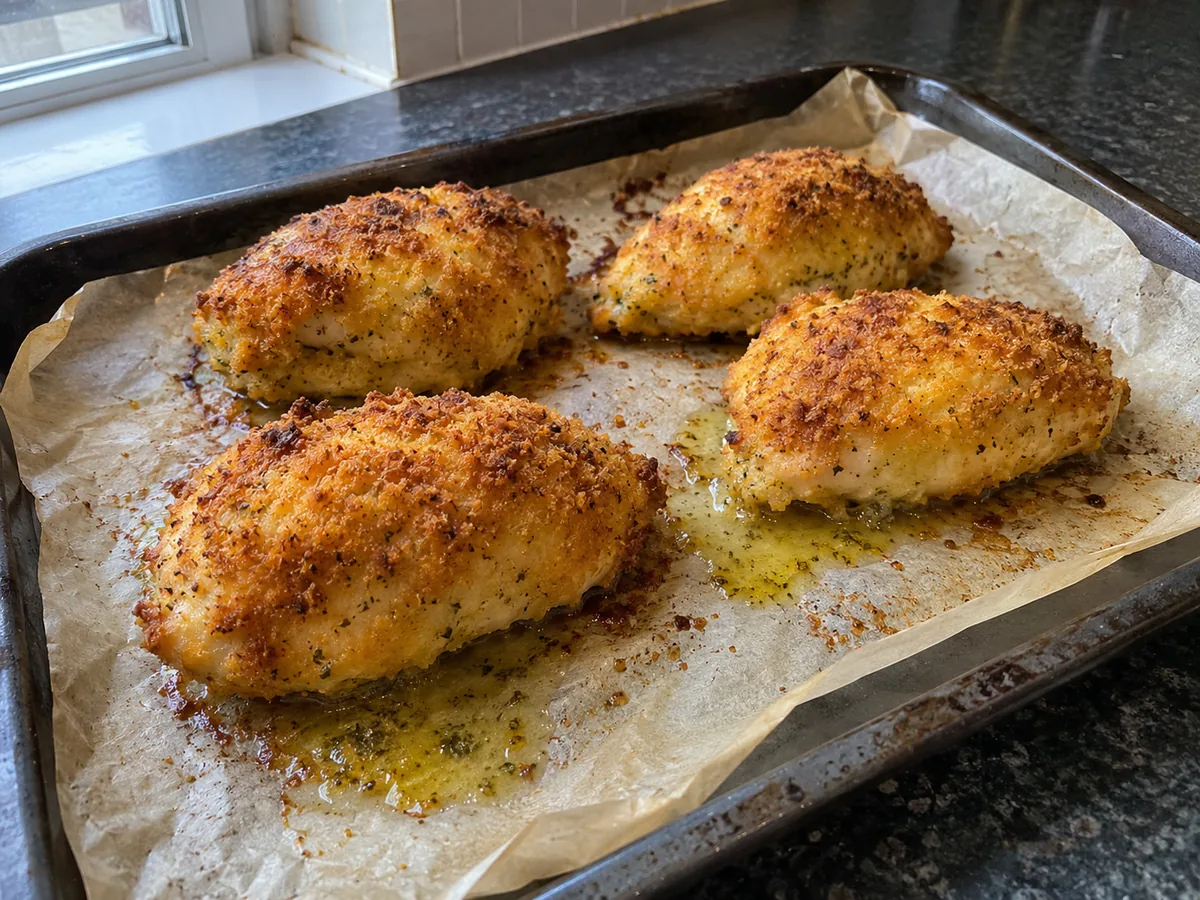
A kiev that leaks butter onto the tray has a seam that opened.
The butter is worth keeping, because it is garlic and herb fat for the chicken gravy above.
Closing the seam tightly and chilling the breaded kievs until the butter is firm before they cook cuts the leaks, and a second coat of crumbs helps seal the crust.
Leftover sauce keeps 3 to 4 days in the fridge, and extension guidance says to bring reheated gravies and sauces to a rolling boil.
Cream and cheese sauces take that only with constant stirring and a splash of milk, so reheat small portions over low heat until bubbling and steaming hot.
Sources
Save These Chicken Kiev Sauces
Keep all 12 sauces, from chicken gravy to chimichurri, for your next kiev dinner.
Frequently Asked Questions
Mashed potatoes are the classic partner because they soak up the garlic butter that runs out when you cut the kiev. Green beans, peas, steamed broccoli or a crisp salad add color and some acid. Those are the same sides that suit any stuffed chicken breast, which is what a kiev is.
Yes. The garlic butter inside is a sauce of its own, so many cooks cut the kiev open at the table and let it run over the potatoes. A sauce helps when the plate lacks moisture or acid, for example when the chicken sits beside plain rice or steamed vegetables.
Gravy, mushroom sauce and cheese sauce can be made a day ahead and reheated with a splash of stock or milk. Chimichurri and the sour cream and mayonnaise sauces can be mixed earlier on the day you serve them. Hollandaise and béarnaise are best made fresh because they split when reheated.
Yes. Chicken stock with a teaspoon of lemon juice or white wine vinegar supplies the acid and depth that white wine substitutes usually provide.
Any sauce that suits a crumbed cutlet suits a kiev. Mushroom gravy and a lemony cream sauce are among the best sauces for schnitzel, and mushroom gravy is close to the creamy mushroom sauce above. Tartar sauce, a mayonnaise base with pickles or capers, belongs to the same family as lemon dill mayonnaise.
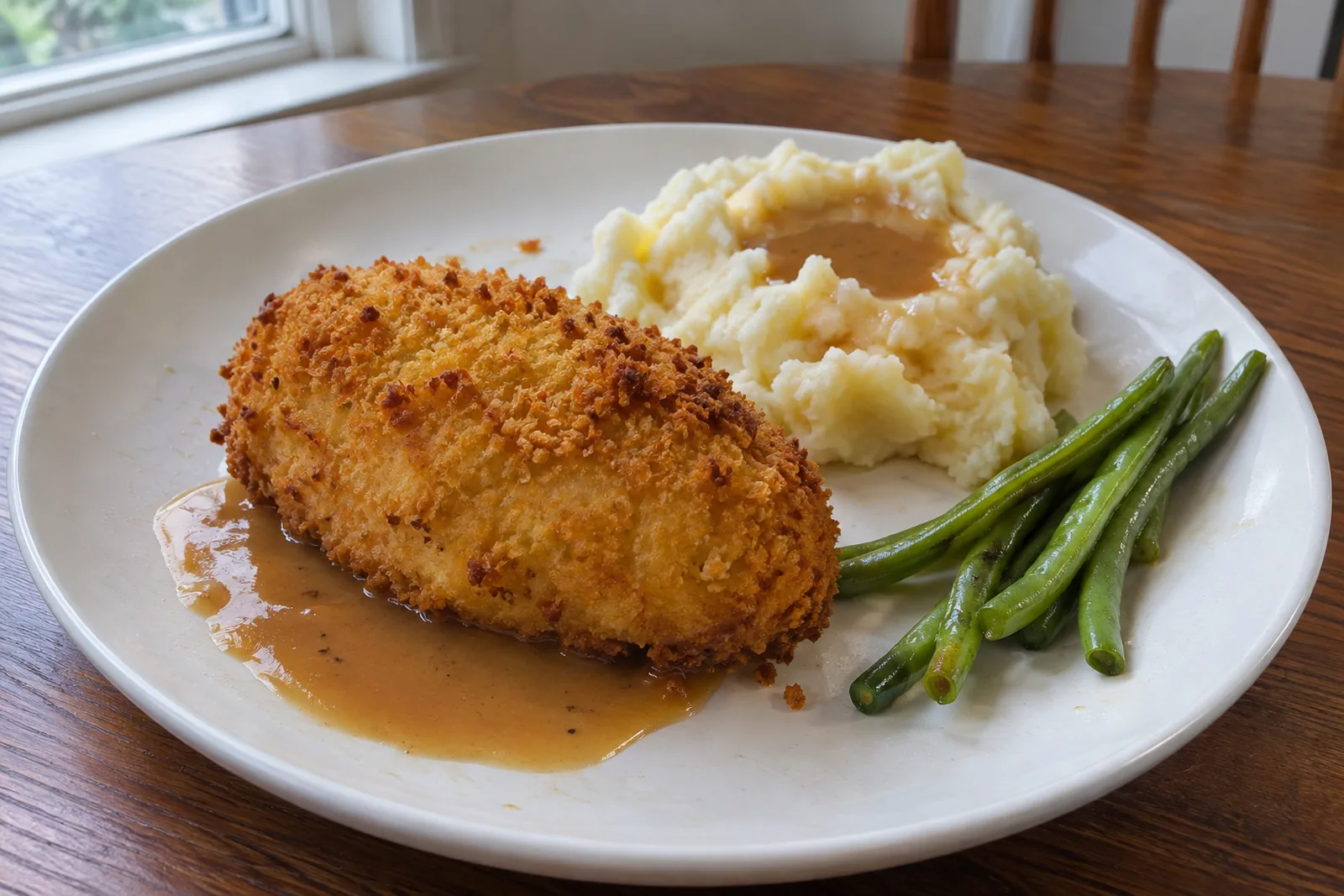
What Sauce Goes with Chicken Kiev? 12 Options
Ingredients
Method
- Check the chicken first. Slide an instant-read thermometer in from the short end and read the center once. The safe minimum for chicken breast is 165°F (74°C). For frozen kievs, follow the pack and still check the center.
- Choose the sauce by the plate. Chicken gravy or creamy mushroom sauce goes over mashed potatoes. Chimichurri, mint sauce or mango chutney cuts the butter. Hollandaise and béarnaise go on as a small spoonful.
- Spoon the sauce beside or under the kiev. A ladle poured over the top turns the crust soft.
- Use pasteurized egg yolks for hollandaise, béarnaise and homemade mayonnaise, because FDA advises pasteurized eggs for recipes with raw or undercooked eggs.
- Keep leftover sauce 3 to 4 days in the fridge. Bring reheated gravies and sauces to a rolling boil, or reheat small portions of cream and cheese sauces over low heat with constant stirring and a splash of milk until bubbling and steaming hot. Hollandaise and béarnaise split when reheated, so make only what you will serve.
Notes
- Gravy, creamy mushroom sauce and chimichurri are the three safest picks
- The kiev already has garlic butter inside, so sauces should add acid, herbs or a savory base
- Safe minimum for chicken breast: 165°F (74°C) in the thickest part
- Spoon sauce beside the kiev, because a ladle over the top softens the crust
- Hollandaise, béarnaise and homemade mayonnaise need pasteurized yolks
Tried this recipe?
Let us know how it was!
Carrie is a food writer and editor with more than 15 years of experience. She has worked for some of the biggest names in the food industry, including Bon Appétit, Food & Wine, and Martha Stewart Living.
As the Editor in Chief of EpicureDelight, Carrie oversees all of the content on the site. She also manages the team of contributing writers and editors, who help to create delicious recipes, helpful tips, and informative articles that you’ll find on the site.
A native of the Chicago area, Carrie is passionate about all things food. She loves trying new restaurants and experimenting with new recipes in her kitchen. She’s also a graduate of the Culinary Institute of America, so she knows a thing or two about food!